skip to content
Eden Succulents
Everything You Need To Know About the String of Buttons Plant

Everything You Need To Know About the String of Buttons Plant

A lot of succulents are being grown in homes because of their distinct appearance and lovely foliage. One of these plants is the String of Buttons. If you have not heard about this plant, you came to the right place! In this article, we will be discussing everything you need to know about the string of buttons plant. Keep reading below to find out more information.

Its scientific name is Crassula perforata. It is also known as the Pagoda plant, Necklace Vine plant, and Stacked Crassula. The String of Buttons plant is a native succulent found in South Africa.

This succulent is a shrub-like plant that grows straight and tends to crawl or spread when it is fully grown. It has a unique appearance; its stems and leaves appear like they are stacked on top of each other. It grows extremely fast if left on its own, so proceed with caution when you are planning to grow it in your outdoor garden.

Appearance: The Spring of Buttons plant has green-gray leaves that are triangular and grows spiral on the stem of the plant. The edges of the leaves may have a rosy pink color, especially when exposed to full sun. It may also have tiny white or pink dots spread out on the margins of the leaves.

The String of Buttons succulent can form small colonies since it spreads and grows fast. It is an aggressive suckering succulent. It is capable of growing over and through other plants so you must allow space when growing it in the garden with other plants. The Crassula perforata succulent is usually described as growing in a “piling” pattern. There are a lot of Crassula species that look amazing such as Crassula deceptor and Crassula brevifolia.

Size: The String of Buttons succulent can grow up to 1-2 feet in height and can spread out to 2-3 feet. When growing it outdoors, allow at least 36 inches spacing from other plants. In the wild, its stems can grow up to 30 feet in length. This succulent has a strong root system and it is commonly grown because of its beautiful foliage that resembles small spirals and may seem like beads or buttons, hence the name “String of Buttons plant”.

Flowers: The String of Buttons plant bloom flowers, but they are tiny and do not have a scent. The tiny star-shaped pale-yellow or pink flowers may grow during springtime and will grow up to 1/4 of an inch in size. If your string of buttons plant does not bloom any flowers during springtime, do not worry, it does not mean that the plant is dying. Sometimes succulents do not bloom flowers because of its growing conditions.

Sometimes, gardeners trim the flowers because it can cause the plants stems to die-off. The String of Buttons will attract pollinators such as bees, butterflies, and hummingbirds. You must trim off the dead flowers when they die. The flowers wither fast, so you can preserve the plant’s lovely appearance.

Flowers

What Are Some of the Uses for the String of Buttons Succulent?

Most gardeners use this plant for different types of landscaping. It can be used as a border plant or as a ground cover if allowed to spread in a wide area. They are now commonly used in xeriscapes. When they are fully mature, the Crassula Perforata can be placed in terrariums or hanging planters.

Growing Conditions for the String of Buttons Plant

When you are growing the String of Buttons succulent, you must use well-draining soil. You can use a succulent/cactus soil mix, you can also use potting soil mixed with sand. You must use a well-draining container like this. It grows well in soil with a slightly acidic pH, around pH level 6.

You can use perlite with potting soil to allow the fast draining of water when growing the String of Buttons plant in a container.

Light – The string of buttons plant needs sunlight to grow properly. If possible, place it in an area with partial or indirect sunlight throughout the day. When growing it indoors, you can place the string of buttons in a window that receives sunlight. Make sure it is well-protected from midday heat, especially in places with hot climates. Avoid placing it in the south-facing window. If growing it outdoors, ensure that the plant gets at least 4 hours of sunlight every day.

Growing Conditions for the String of Buttons Plant

Temperature – The string of buttons is recommended to be grown in USDA zones 9-11. It is not a frost-hardy plant; it will not survive freezing temperatures or extremely humid areas. If you live in areas outside Southwestern America, you must grow this plant indoors only. Temperatures between the 60s and 70s degrees Fahrenheit must be maintained for it to grow its best. During wintertime, the temperature must be around 50 degrees Fahrenheit for it to thrive.

Watering – The Crassula perforata is a drought-tolerant plant. It retains water so it can survive even when you forget to water it. Water the plant when the soil has dried out completely. You can water it every 7-10 days and sometimes more during the warmer months. When the weather cools down, you can water every 10-14 days. During wintertime, you can avoid watering or do it at least once a month or every 2-3 weeks.

Overwatering is a big no-no for this plant as it can die from root rot! When growing in containers, do not leave your string of buttons plant to sit in water!

Fertilizers – You can use a fertilizer for the string of buttons plant; add diluted liquid fertilizer every 2 weeks during the growing season. You must dilute the fertilizer in 1/3 strength. You can also use a 20-20-20 fertilizer. For younger succulents, use a fertilizer with less nitrogen content.

Maintenance – The string of buttons grows fast, so you have to trim it to prevent it from spreading fast in your garden. It can be trimmed any time of the year especially when the stems have grown quite long.

Repotting – Repotting of the succulent can be done every 3 years and whenever the plant has outgrown its container. When you need to repot the string of buttons plant, you must do it during early spring before the growing season occurs.

Is the String of Buttons Toxic or Non-Toxic to Pets?

The String of Buttons is not listed as toxic to pets on the ASPCA website. If you suspect poisoning to any of your pets, you must contact your local veterinarian or animal hospital as soon as possible or you can call the ASPCA Animal Poison Control Center at 888-426-4435 for further instructions.
Is the String of Buttons Toxic or Non-Toxic to Pets?

How to Propagate the String of Buttons Plant

This succulent can be propagated by using side-shoot cuttings. The cuttings can be taken from stems. You can do this by removing a piece of stem 4 inches long and it must contain several leaves.

Allow the stem to dry for 2-3 days, then plant it on the same soil used for the parent plant. The soil must be well-draining. You can add sand on regular potting soil. The cuttings must be placed in an area that receives enough sunlight.

Within 1-2 months, the cuttings will grow roots and can be transplanted into individual containers. Water the plants accordingly, but do not overwater them. You can also propagate this succulent by using leaf cuttings and offsets that have grown from the parent plant.

Keep in mind that the Crassula perforata succulent develops roots slowly so you must be patient. Roots usually sprout from leaf scars, so allow some of the leaves to be bare when you plant it. The lower part of the plant is quite woody and can be quite difficult to propagate. You can use cuttings higher up the stem. Do not use a stem that is dehydrated, because new roots will only develop when the stem is well-hydrated and fleshy.

String of Buttons Plant Pests and Diseases

Insects and pests rarely attack this succulent, but you must watch out for mealybugs, aphids, and vine weevil. Fungal diseases can happen when over watering occurs. Avoid leaving the plant standing in water if growing it in containers because overwatering can cause root rot!

It commonly occurs in areas with colder climates or during wintertime when there is not much sunlight exposure. Avoid watering the plant during wintertime. Also, you must allow the soil of the plant to dry out in between watering. If rot is detected on the plant, cut it out and decrease the frequency of watering. The String of Buttons is deer-resistant.

There are a lot of different succulent types. One of them is the Strings of Buttons plant. If you are searching for information about this succulent, Eden Succulents is the right place for you!

We will share our knowledge about the Strings of Buttons plant, if you have any inquiries or questions about this succulent or you want to find out more information about other types of succulents, you can check out our website. If you have any comments or suggestions, please let us know. We would like to hear your thoughts!

Deco Glass Terrarium, Succulent, Air Plant

Deco Glass Terrarium, Succulent, Air Plant

  • Large Glass House Terrarium, Succulent & Air Plant Greenhouse
  • Beautiful rose gold accent and ventilation
  • Great for growing microgreens, succulents, air plants, moss, cacti, and more.
Crassula Perforata String of Buttons Plant Necklace Vine Succulent

Crassula Perforata String of Buttons Plant Necklace Vine Succulent

  • Germination tested and guaranteed
  • Fresh seeds
  • 5 seeds per pack
Hanging Planter Flower Plant Pots

Hanging Planter Flower Plant Pots

★UNIQUE MARBLE PATTERN: The modern concrete look hanging planters with marble pattern, unique texture and distinguished features, are widely used in balcony, patio, garden, home, room, indoor and outdoor planting.
Perlite 4 QT - Super Coarse

Perlite 4 QT - Super Coarse

  • Bagged 4 quart size. Just for the hobbyist that does not need a large 4 cu ft bag
  • Super Coarse grade. Great for orchids and other potted plants
  • Perlite helps improve drainage and aeration when mixed with potting
Tips for Growing Panda Plants

Tips for Growing Panda Plants

Panda plants are one of the most popular succulents to grow and care for since they can be grown indoors. Its beautiful brown spots make it a unique plant that can be added to your indoor decoration. If you are planning to grow one, you’ve come to the right place! In this article, we will share some tips for growing panda plants. Keep reading if you want to know more information about the Panda Plant.
Tips for Growing Panda Plants

What is a Panda Plant?

Its scientific name is Kalanchoe Tomentosa; this succulent plant is native to Madagascar. It is also known as Chocolate Soldier, Cat Ears, and Cocoon Plant. A Panda plant in the wild has a woody base and may reach up to several feet in height. When grown indoors, panda plants can be limited depending on the size of the container used to grow it. It can grow up to 1-2 feet tall and 2 feet wide.

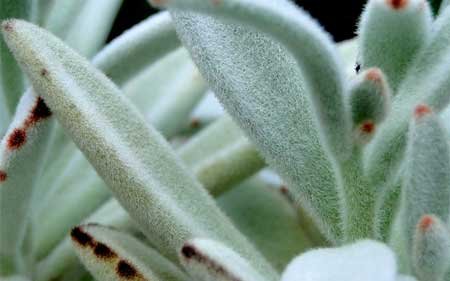
The leaves of the panda plant look velvety in appearance due to its hair-like trichomes which help deflect light and limit the evaporation of water from the plant. The leaves are oval-shaped and grayish-green in color and have brownish-red markings on its edges and it has white-silvery hairs that resemble the fur of a panda bear. Tomentosa is a Latin word that means covered in hairs, which perfectly describes the leaves of the panda plant.

Panda plants have a thick stem and branches out and form different groups of leaves once it is fully mature. Panda plants can be pruned so it can have a tree or bush-like appearance. It can also produce branches below its container which makes it perfect for growing in hanging containers like this.

Do Panda Plants Bloom Flowers?

Panda plants can bloom flowers on its natural habitat. hHowever, it rarely blooms when grown indoors. It is mainly grown indoors in homes or offices because of its unique-looking foliage. If you are lucky enough, when a panda plant blooms flowers, you will see tiny lovely tubular-shaped flowers that bloom on the tips of its branches.

Can You Use a Panda Plant for Decoration?

When the panda plant has fully grown, it can be placed in a hanging planter. Panda plants prefer bright sunlight; you can also use grow lights like this if you are growing it indoors. You can also place them in a windowsill that allows them to receive enough sunlight every day.

Can You Use a Panda Plant for Decoration?

Warning: Panda Plants are toxic to cats and dogs! Keep it away from your pets and even small children. You can place your panda plant in an area where no one can reach it.

Check out the tips for growing a panda plant below.

How Often Do You Water the Panda Plant?

Just like other succulents, panda plants have leaves that can store and contain water. It can survive long periods of drought, especially when grown in an area with dry climates. If you have a busy lifestyle, do not worry because this succulent is perfect for you, it can thrive even when you forget to water it for at least a week or two.

When watering the panda plant, you must water it thoroughly until the soil is no longer absorbing water or you can place some water in the bottom tray. Make sure to remove all excess water after the soil has absorbed the water for approximately 10-15 minutes.

Avoid watering the leaves of the plant because it is prone to rot. If they get accidentally get wet, use a tissue to dry it but do it gently so you can remove all the water from the leaves. You must also remember to lessen the frequency of watering during the colder months.

Do Panda Plants Need Fertilizer?

Panda plants can be given fertilizer during springtime and summertime. During wintertime, you must not feed it with fertilizer as it experiences winter dormancy. You can use diluted fertilizer, make sure it is water-soluble. You can apply it to the plant once every four weeks. Get your succulent fertilizer here.

What Are the Preferable Light Conditions When Growing a Panda Plant?

Generally, succulents prefer bright sunlight; the panda plant loves the sun. You can also provide light shade so the leaves of the plant will not be damaged or experience sunburn when exposed to too much sunlight. You can place your panda plant on a sunny windowsill for a few hours in the morning or afternoon.

You can place your panda plant outside during summer but make sure to do it gradually so its leaves will not get burned. If you live in an area with a warm climate and you get lots of sunshine, you can place your panda plant in a shady area during the afternoon to prevent its leaves from getting damaged from too much sun exposure.

What Are the Preferable Light Conditions When Growing a Panda Plant?

What is the Preferred Temperature When Growing a Panda Plant?

Panda plants prefer temperatures between 60 degrees Fahrenheit up to 75 degrees Fahrenheit, or 15 degrees Celsius up to 23 degrees Celsius, but it can thrive in areas with slightly higher or lower temperature conditions.

Panda plants can be grown outdoors during the warmer months, but you must place it indoors when the cold weather comes. Panda plants are not frost-hardy succulents, they can be damaged by cold temperatures and can even die from it. It will also not tolerate excessive heat and you must water it frequently during the summer months.

How to Repot a Panda Plant

A panda plant, just like any succulent plant, needs well-draining soil and a container with drainage holes. You can use a succulent/cactus potting mixture or you can mix your own by mixing regular soil, sand, and loam. You can use clay pot pieces at the bottom of the pot to allow optimal drainage for the plant, you can also use pumice stones to allow water to drain thoroughly. You can plant the panda plant on terracotta containers which allow faster draining of water.

If you live in an area with mild climates, you can grow your panda plant outdoors. Make sure it will not be exposed to extremely cold temperatures. It must also be protected from rain because water can cause the leaves to rot. You can plant your panda plant in a pot or container and bring it outside during summertime.

The panda plant grows slowly, so frequent repotting will not be needed. You can use a 5-inch pot because panda plants grow only up to 18 inches tall. You can repot it every two years while it is growing.

How to Repot a Panda Plant

How to Propagate a Panda Plant

You can propagate your panda plant by taking several leaves from the mature plant. It is quite easy and will not cost as much as buying another succulent plant. Panda plant propagation can be done during springtime or summertime when the climate conditions are preferable for a small plant to develop and for it to grow properly.

Just take a few leaves from the plant, remember to not take too many as it can weaken the plant. Avoid taking only a single leaf because it may not grow roots. You can place the leaves in a perlite mixture or you can use a sandy potting soil mix. You can get perlite here.

Allow the leaves to dry for at least 5-7 days before placing them in the soil, and you can start watering them to promote faster growth, do not allow them to be dry for too long as it can cause them not to grow roots. After planting your panda plant leaves on a pot, you can place them in an area with lots of indirect light. Water the leaves when the surface of the soil is thoroughly dry.

After 3-5 weeks, the leaves will develop roots and new leaves will sprout around it. At this point, you can repot your new panda plant on a container with a succulent/cactus soil mix.

Panda Plant Pests and Diseases

Panda plants are prone to pests and diseases, like mealybugs. If you find your panda plant with a web-like white substance, it means mealybugs have affected it. Mealybugs are commonly found in areas of the plant where the leaves meet the stem.

These can also affect other plants so you must immediately separate the affected plant and treat it with rubbing alcohol. You can use a cotton applicator and apply the alcohol on the leaves or you can use a spray bottle and spray it on the affected spots. You can also use pesticides but be very careful as it can end up damaging your panda plant as well.

Panda Plant Pests and Diseases
Are you searching for information or tips for growing panda plants? You came to the right place! Here at Eden Succulents, you can get all kinds of information about succulents. We will do our best to share what we know about the different types of succulents.

If you need information or a guide on how to take care of a succulent make sure to check out our website. Please let us know if you have any comments, suggestions, or information that you want to share with us. We look forward to hearing from you!

Cactus and Succulent Soil Mix by rePotme

Cactus and Succulent Soil Mix by rePotme

  • High Quality Mix That’s Ideal for Succulents, Cactus, Plumeria, Christmas Cactus, and Epiphylliums.
  • Hand-Crafted in Small Batches Everyday to Ensure Quality and Freshness
Miracle-Gro Liquid Succulent Plant Food

Miracle-Gro Liquid Succulent Plant Food

  • Instantly feeds succulent plants, including cacti
  • For all cacti, jade, aloe and other popular succulents
  • Feeds instantly
Hanging Planters Large 13.2 Inch Resin Flower Pots Outdoor

Hanging Planters Large 13.2 Inch Resin Flower Pots Outdoor

★Sturdy Hanger & Outdoor Use – Adjustable rope with khaki finishing hanger withstands the elements while providing secure support. (The hanging height can be adjusted to your needs.) A heavy-duty triple-rope hanger ensures that your baskets stay safe and secure wherever they’re installed.
List of Purple Succulents You Can Grow At Home

List of Purple Succulents You Can Grow At Home

Succulents are usually grown by plant lovers and gardeners because of their beautiful colors. Plants are usually green in color, while there are succulents that have red, blue, and purple colors that make them an amazing addition to any landscape. If you have a terrarium or a planter, you can incorporate different colored succulents to make them stand out as an addition to your decoration in your home and garden.

If you are getting bored with plain green plants in your garden or succulent garden, you can consider getting purple succulents. If you are searching for a list of purple succulents you can grow at home, you’ve come to the right place! Make sure to keep reading below to find out more information.

List of Purple Succulents You Can Grow At Home

Echeveria Taurus

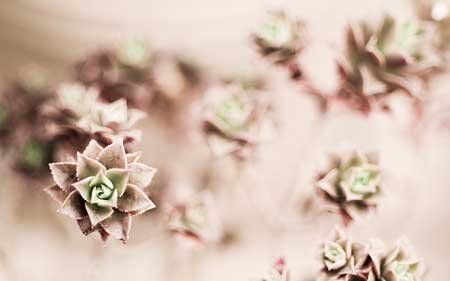
Echeveria succulents are commonly grown by plant lovers because of their gorgeous rosette form. If you are a fan of echeveria succulents, you can get the Echeveria Taurus. This plant’s foliage has deep plum color and the tips of the leaves have a darker color.

It needs to be grown in an area that receives lots of sunlight so you can preserve its beautiful color. It can grow 10 centimeters in height and 30 centimeters in width. The active growing season for this plant is during summertime, which is around May and June. During summertime, it can bloom flowers, just make sure to decrease the watering frequency when it happens.

Echeveria Taurus

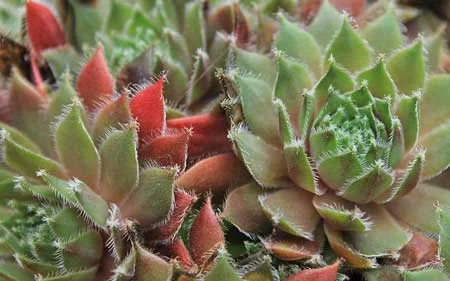
Sempervivum Raspberry Ice

This succulent belongs to the sempervivum genus. The Sempervivum succulents are commonly known as Houseleek or Hens and Chicks. The sempervivum raspberry ice is one of the most-resistant outdoor succulents, which makes it an excellent addition to any garden.

This succulent is resistant to pests and diseases. It blooms flowers during summertime and it is known to attract different pollinators such as bees and butterflies. Sempervivum succulents bloom flowers when they are fully mature.

The sempervivum raspberry ice has a unique appearance and its leaves are covered with cobwebbed tiny white hairs and have burgundy and a combination of violet and shades of purple.

Echeveria Black Prince

This echeveria succulent has dark green and dark purple leaves. This plant has a tinge of yellowish-green on the center of the plant’s rosette and spreads on the tips of the leaves. When the echeveria black prince has been exposed to more sunlight, its dark color increases and darkens. When kept in shady areas, the plant will have pale purple or green leaves.

Its leaves are thick, fleshy, and wide and it has pointed tips. This succulent blooms dark red flowers that perfectly complements its dark foliage. This succulent is a hybrid of Echeveria shaviana and Echeveria affinis. You can use this succulent as a dark accent to any garden arrangements.

Anacampseros Rufescens

This succulent is also known as Sand Rose and Sunrise Succulent. It grows near the ground and it is a native plant to South Africa. This plant has colorful foliage, with varying shades of green, purple, pink, and yellow-green.

It also has thin white hairs on the leaves of the plant. It grows and forms into clusters and tends to spread overtime when it is fully mature. This plant is low-maintenance and can be grown and added to any succulent collection if you want to add a splash of color to a garden full of green succulents.

Tradescantia Pallida

It is also known as Purple Heart Wandering Jew and Purpurea. This succulent is commonly used as a ground cover. This plant grows shallow in the soil but it is known for being hardy to warmer climates, but won’t be able to survive colder climates. They can be planted outdoors for those who live in areas with warm and dry climates so it can receive plenty of sunlight every day.

Tradescantia pallida succulents have dark-green sword-like leaves that grow around its stem. The leaves have burgundy-purple color on its edges and look amazing when the tiny pale flowers bloom during summertime.

Sempervivum tectorum

It is also known as Purple Beauty. This succulent has a star-shaped rosette with purple shading. This plant can be grown in large pots and grown outdoors so they can get more sunlight every day because this succulent loves full sunlight. This succulent is more cold-tolerant than most succulents and usually, its purple color darkens during the colder months.

It can grow up to 4 inches to 12 inches and spreads up to 12 inches and it blooms pink flowers. This plant can be used as a ground cover. Water this plant thoroughly and allow the soil to dry out completely before watering it again. This plant is easy to propagate because it produces small plants also called “chicks” that can be transplanted in another container.

Sempervivum tectorum

Sedum Dasyphyllum

This succulent is also known as Sedum Burnatti and commonly called as Corsican Stonecrop. The sedum dasyphyllum is a low-growing shrub, it is a native plant found in rural areas of the Mediterranean.

This plant has mint-green foliage and it grows lilac purple leaves when exposed in full sunlight. Its leaves are tiny and plump with rounded tips, making it a lovely addition to any terrarium or succulent indoor garden. Its newly-grown leaves have green colors and may turn purple when it matures.

Lithops Optica

It is also called “Rubra”. This succulent is a native plant found in Namibia. It has quite an unusual appearance and it is perfect for individuals who are big fans of the Lithops succulent. This plant has a distinct purple hue, making it stand out in a garden landscape. This plant has deep purple bodies that grow in pairs. It blooms white flowers in the center of the two leaves.

They have unique growing conditions. For example, you need to stop watering these during the warmer months and as well as in the middle of winter because the plant undergoes winter dormancy. They can be quite difficult to grow and can be rare to find.

Opuntia Violacea var. Santa Rita

It is also known as Purple Prickly Pand Santa Rita prickly pear. This succulent is commonly found in southern Arizona, New Mexico, and some parts of Mexico and Texas. The prickly pears have been quite popular nowadays because it has lovely and colorful pads. The pads can have purple tones but it ranges from green, blue-green, and light to deep purple.

When the plant is quite stressed, its deep color darkens. It also occurs when it is exposed to extreme cold weather and when it receives a small amount of water. When left alone in the wild, the Purple Prickly Pear can grow quite tall with a height that ranges from 4-6 feet in height and 4-5 feet in width. During springtime, it blooms yellow flowers which adds a great contrast to its purple-colored pads.

Aeonium Arboreum var. Atropurpureum

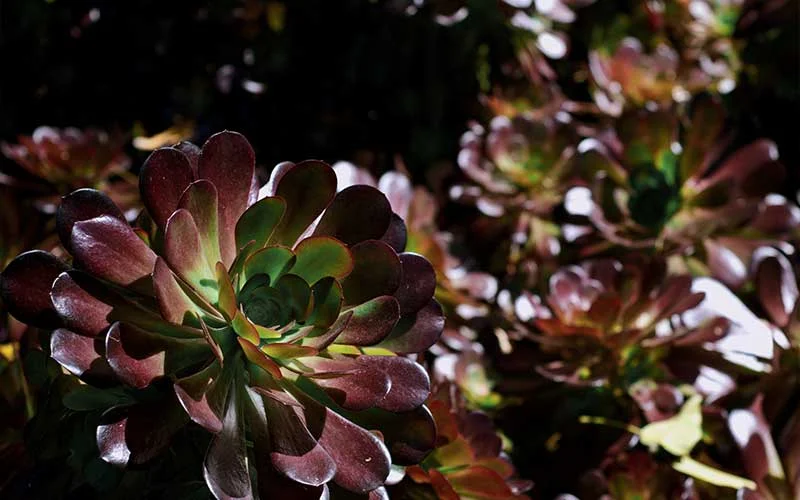
It is also known as Purple Aeonium or Purple Rose. It is quite similar to the Aeonium arboreum succulent but they have shorter stems and have smaller rosettes. The purple rose succulent has purple, dark purple and reddish-purple leaves. It can grow up to 2-3 feet in height and its stems can branch out up to 3 feet in length. They prefer areas with a light shade to full sun exposure. When it is exposed to full sunlight it produces beautiful purple hues.

Aeonium Arboreum var. Atropurpureum

Aeonium Arboreum var. Atropurpureum

It is also known as Purple Aeonium or Purple Rose. It is quite similar to the Aeonium arboreum succulent but they have shorter stems and have smaller rosettes. The purple rose succulent has purple, dark purple and reddish-purple leaves. It can grow up to 2-3 feet in height and its stems can branch out up to 3 feet in length. They prefer areas with a light shade to full sun exposure. When it is exposed to full sunlight it produces beautiful purple hues.

Pleiospilos nelii

It is also known as the Royal Flush. This succulent grows up to 3 inches in height and 4 inches in width, which makes it perfect for growing in small containers. This plant usually has two to four leaves that have deep grooves on their centers. The leaves are purple and are covered with small raised dots.

It blooms bright pink and white flowers that look like daisies. When growing this plant, make sure to remember that it is quite difficult to care for. This succulent needs regular but light watering and it also needs partial sun exposure and well-draining soil. This plant in the wild is used to regular moisture that occurs when there are frequent fog and condensation in the area.

If you want to add a splash of color and make your garden lively, make sure to consider adding purple succulents to your collection. The list above is just some of the purple succulents that we have in mind. If you have any purple succulents that you want to share with us please let us know. We would like to hear from you!

Pleiospilos nelii
Do you like growing cute and lovely succulents? Are you planning to grow purple succulents? If you are searching for any information about purple succulents, you’ve come to the right place. Here at Eden Succulents, we always try our best to share information about different types of succulents.

Make sure to check out the list of purple succulents you can grow at home that we have mentioned above. If you need more information or you are searching for a guide on how to grow and care for different types of succulents make sure to check out our website and feel free to browse the rest of our information catalogue for anything and everything succulent-related.

KooK Geometric Glass Terrarium, Eloquent Design, Plants, Succulents, Votive Candle Holder

KooK Geometric Glass Terrarium, Eloquent Design, Plants, Succulents, Votive Candle Holder

Both contemporary modern style and classic elegance come together with this artistic glass cube.
Classic Home and Garden 72 Whiskey Barrel

Classic Home and Garden 72 Whiskey Barrel

  • Classic whiskey barrel planter in a Distressed Oak finish with antique pewter colored bands
  • Uv coated finish protects color from fading
  • Lightweight and durable high density resin construction
Purple Heart Tradescantia Pallida Purple Queen Wandering Jew 'Purpurea' Plant

Purple Heart Tradescantia Pallida Purple Queen Wandering Jew 'Purpurea' Plant

A compact slowly spreading evergreen perennial to 10 inches tall by about 2 feet wide with succulent herbaceous purple stems bearing clasping elliptic leaves that are narrowed at the base and tip that are olive green suffused with purple on the upper surface and bright purple below with long sliver hairs along the leaf margins and stems.
How to Care for The Maternity Plant

How to Care for The Maternity Plant

Among the thousands of plant species in the world, only a few are able to produce their young right on the edge of their leaves. The Kalanchoe daigremontiana, the Maternity Plant or also known as Mother of Thousands, is one of those very few plants in this world.

Isn’t that beautiful? You are able to witness this plant produce its younglings before your very eyes. But wait, you are probably wondering how this maternity plant is able to produce their young on the edge of their leaves. Before going into that story, let us tell you a few more things about this amazing plant.

The Maternity Plant or Mother of Thousands is a member of the Crassulaceae family. They are also related to the famous jade plant and Flaming Katy (Kalanchoe blossfeldiana). It looks a whole lot like the chandelier plant! They even share a lot of similar growing conditions and traits.

Alright, so going back. How come this plant is able to do such a “motherly” thing? Here is the story! This maternity plant is actually not able to produce seeds. Therefore, they are only able to reproduce from plantlets, and not just plantlets but a lot of plantlets. Sometimes, they can get out of hand because the maternity plant is an abundant producer. No wonder it is also called the Mother of Thousands.

Caring for The Maternity Plant

Since the succulent plants are known for withstanding long dry seasons, the Kalanchoe daigremontiana is also able to do so. However, even if this succulent plant can resist drought, this plant’s performance, health, and quality will be better if it will be regularly watered. You do not even need frequent fertilization. That is one of the beauties of this plant along with its relatives. So, if you wish to cut the cost by cutting off fertilizer, getting the Mother of Thousands is the perfect succulent to keep in your home.

Let us proceed! This particular succulent does not necessarily need good drainage. However, it is still the best decision to pot this maternity plant in a commercial cactus soil mix. If you choose to use standard potting soil, it is still a must to put sand in the potting soil to provide sharper drainage.

If you are new to the gardening industry, we know how challenging it can be to pick the right essentials and tools for your plants. Being a gardener is not an easy role. Being a gardener is somehow similar to being a mother because technically, you are taking care of life and you have the challenging yet fulfilling role of nourishing this life or these lives (if you have more than just one succulent) on your own hands.

Choosing the soil, for example, is one of the particularly harder tasks. However, when choosing the best soil for your succulents, you have to realize that our succulents are not as picky as you think. You do not need to go on a search for the best potting soil ever because your succulents’ needs are actually pretty simple. For as long as the potting soil that you will use on your succulents has the balance of absorbing and draining water, your succulents will thrive.

How to Care for The Maternity Plant
Nevertheless, if you have no experience with purchasing soils, do not worry. Just read ahead because we are going to share with you what we recommend you use for your succulents potting soil. Eden Succulents is here to rescue you!

Top 3 Succulent Potting Soils to Use

1. rePotme Cactus and Succulent Soil Mix

This Cactus and Succulent Blend potting mix contains coir, perlite, pumice, sand, and stalite. This is actually one of the best brands to use because it is rot resistant. What does that mean? It means that this soil mix is able to provide excellent drainage while absorbing ideal amounts of water.

It is able to do so because of its unique ingredients such as pumice, coir, and stalite. The coir is the most unique ingredient. The presence of coir means there is the absence of peat moss. This makes the potting soil a wonderful draining mix not just for succulents but for other houseplants as well such as plumeria. Check it out for the prices and if it ships to your area!

2. Superfly Bonsai Succulent and Cactus Soil Mix

The Superfly Bonsai mixes different components from the best places. This potting mix contains ¼ hard Japanese Akadama, ¼ USA Pumice, ¼ New Zealand Pine Bark, and ¼ Haydite. With all these non-organic ingredients combined (no dirt!), your succulents are provided with optimal drainage, water retention, nutrient uptake, and air to the roots (which succulents super love).

3. Succulent Planter Soil Kit

Bonsai Jack Succulent and Cactus Soil Gritty Mix. Your succulents will absolutely love this potting soil. This soil is not only fast-draining, but it is nurturing as well. This soil is also good at preventing root rot and overwatering. This potting soil is in demand among both succulent hobbyists and experts.

Let us proceed to other ways you can take care of your maternity plant so that it can be a Mother of Thousands! Ha! See what we did there?

If you choose to grow the maternity plant indoors, you must first locate an area where your succulent can receive bright, indirect light for several hours. On the other hand, if you choose to grow the maternity plant outdoors, while succulents love the sunlight, you have to avoid giving them direct afternoon sun. Too much direct sunlight may get your succulents’ leaves to burn. We do not want that to happen to our precious succulents.

Why You’ll Love Taking Care of The Maternity Plant

Why You’ll Love Taking Care of The Maternity Plant
As you go on with your journey with taking care of the maternity plant, you will discover that is really easy to take care of the Mother of Thousands. It is actually one of the most carefree plants to take care of. However, the joy of taking care of plants is still there and you will feel fulfillment as you see the mother of thousands produce plantlets.

How about you send us photos of your maternity plant? We would love to see how you took care of them. Check out the rest of our site for any other succulent-related information you may need to grow your own succulents.

Cactus and Succulent Soil Mix

Cactus and Succulent Soil Mix

  • High Quality Mix That’s Ideal for Succulents and Cactus.
  • Hand-Crafted in Small Batches Everyday to Ensure Quality and Freshness
Succulent & Cactus Soil Mix

Succulent & Cactus Soil Mix

PRE-MIXED & READY TO USE – Sifted Prior To Bagging – 1/4 Hard Japanese Akadama – 1/4 USA Pumice – 1/4 New Zealand Pine Bark and 1/4 Haydite
Bonsai Jack Succulent and Cactus Soil Gritty Mix

Bonsai Jack Succulent and Cactus Soil Gritty Mix

Fast draining & nurturing: our succulent potting soil helps prevent root rot and over watering. It will not damage roots on cactus and succulents. Bonsai Jack succulent soil mix is used by professionals and hobbyists alike to enhance all sorts of succulent plants, including echeveria, crassula, lithops, jade, Aloe, haworthia, crassula, and hundreds more.
What You Need To Know About Fuzzy Succulents

What You Need To Know About Fuzzy Succulents

In one of your succulent-hunting in the market or during your sight-seeing in a succulent garden, you have probably seen all sorts of succulents. You have probably seen succulents of different colors, sizes, and shapes. We are also pretty sure that you have also tried touching some of these succulents, admit it! Well, who wouldn’t try to touch these amazingly stunning succulents, right? If you did, you have probably tried touching a succulent with a unique texture. That is called a fuzzy succulent!

What Are Fuzzy Succulents?

What You Need To Know About Fuzzy Succulents
What exactly are fuzzy succulents and how do you know if they are the fuzzy succulents we are talking about? You will know if they are fuzzy succulents if the leaves have a hairy or velvety texture. You will also be able to identify a fuzzy succulent if you see white hair-like elements growing from the succulents’ leaves.

Why Are Some Succulents Fuzzy?

Not all succulents are fuzzy. Only a few grow this kind of texture. Do you know why? It is actually the succulents’ way of survival. The evolution of the succulents’ fuzzy surface is a way to adapt to being exposed to extreme light. The hairs that make the succulent fuzzy is somehow the succulents’ makeshift umbrella or hat. Each hair that grows from the succulents casts a shade on the surface of the succulent’s leaves. Therefore, this cools the leaves’ surface.

Therefore, if you start to notice white hairs growing out of your own succulents, then that means you need to relocate them to an area where they will receive lesser light. The fuzzy-ness is the succulents’ way of saying that is living or has been living in an unhospitable place or location.

The Needs of Fuzzy Succulents

The Needs of Fuzzy Succulents

Since the fuzzy texture is the result of the succulent’s experience of living in an inhospitable place, this means that it has special needs.

First and foremost, if you are going to water these fuzzy succulents, make sure that you will not pour the water over the succulents’ leaves. Moreover, using cold water especially not good to use on your fuzzy succulents because this will harm the leaves by making a magnifying effect when in full sun. The white hairs that make up the fuzzy texture can be damaged and this will leave the plant to be exposed once again to direct sunlight where it will possibly be burned.

The best watering tool to use for succulents is the UpBloom’s Water Bottle. It is multipurpose watering bottle with an adjustable long reach neck design. It is perfect to use for hanging plants and succulents. It is best to use a watering tool with spout instead of using a spray bottle when watering succulents. This ensures that the water will not get on the leaves. Rather, the water can be directed to the soil where the succulents love it. Click on this link to check on their prices and whether they can ship to your area.

How To Take Care of Fuzzy Succulents

If you have fuzzy succulents, what you will read next is very important so that you will know how to take good care of your succulents. Remember, they have special needs and they will need you to give them extra tender loving care!

First of all, when you water them with “tempered” water only. You can also use water from the rain or from an air conditioner. This will ensure that the water that you use has no minerals in it. Remember that succulents love having their soil soaked. Thus, before you decide to water them again make sure the soil has dried out first. Water carefully! If the leaves get wet, chances are, they will rot. We do not want that to happen to our beloved succulents!

If you feel like you need to clean the leaves of your succulents, use a dry brush probably like a small paintbrush. Consider using this Wooster brush! It is perfect to use to clean your succulents’ leaves because it has soft brushes and tips. It comes in different sizes! Check them out, succulent-lover!

Famous Fuzzy Succulents

Famous Fuzzy Succulents
With the various families and kinds of succulents, there are succulents that are more prone to grow this skin of tiny white hairs to protect the leaves from getting burned. Read ahead to check out the famous fuzzy succulents and their unique qualities and traits.

Panda Plant
The panda plant is also known as the Kalanchoe tomentosa. The panda plant is part of the Kalanchoe genus. The Kalanchoe genus is actually a pretty big family since this includes more than 125 succulent flowering plants. The panda plant is among the most famous fuzzy succulents. They are native to Madagascar. Thus, this succulent has leaves that are thick and covered in felt-like follicles.

If you choose to grow the Panda plant in your home, it is important that you know that this plant prefers full sun. However, it also benefits from light afternoon shade. This panda plant can reach up to 18 inches! Be sure to give this panda plant enough room.

Regarding the soil, the panda plant should be planted in a well-drained soil mix which consists of sand, loam, and gravel. During the winter months, they need minimal water. They only require to be watered once they become completely dry throughout the rest of the year.

White Chenille Plant
This famous White Chenille plant comes from a different genus compared to the panda plant. This plant comes from the Echeveria genus or commonly known as “Frosty.” This plant originated in Mexico. This plant produces orange and yellow bell-shaped flowers in the months of spring and summer.

Since this plant typically reaches 6 to 12 inches in height, you as the gardener should place this plant in well-drained soil. This plant also grows significantly not just in height but also in width since it may sprawl several feet.

Copper Spoons
They are called spoons just for nothing. This type of succulent has oval-shaped leaves. This is best to planted among rocks and dry soils so that its environment imitates its original climate in Madagascar.

This beautiful copper-colored succulent should be kept on the dry side. They also require little to moderate water so be sure not to show your extra love by giving them more water than they need.

Do you have any favorite fuzzy succulent types? Leave us a comment and let us know about some of your own favorites! If you’re interested in learning more about succulents, give the rest of our website a look, we have a little bit of everything for the succulent lover in you!

UpBloom 32oz Plant Water Bottle for Hanging Plants

UpBloom 32oz Plant Water Bottle for Hanging Plants

  • Position-able long neck tube stays in place – perfect for watering overhead and hard to reach plants
  • Tube stays put in any direction or angle you choose; Allows you to direct water right where you want it – between the leaves and to the root base
Wooster Brush Q3208-1 Softip Angle Sash Paintbrush

Wooster Brush Q3208-1 Softip Angle Sash Paintbrush

  • Soft brush tips provide a smooth and even finish with all latex and oil-based paints
  • White nylon and gold polyester with chisel trim
  • Brass-plated steel ferrule