skip to content
Eden Succulents
The Meaning Behind Every Succulent Arrangement

The Meaning Behind Every Succulent Arrangement

Generally, plants can survive when there are water and sunlight. Plants vary when it comes to their strength. There are some plants which are stronger than the others. Regardless of the plant’s size, whether it is big or small, there is always a meaning behind it. Succulent plants are proven to be resolute since they have the ability to store water in their chunky leaves and stems. This implies that succulents are a symbol of lasting and eternal love.

Succulents show us to always stay positive most especially during those difficult times. These plants preserve water so they can thrive when drought comes. It reminds us to be stronger and to be always ready in facing those strenuous situations.

Succulents come in a variety of shapes and colors, making them an incredible addition to your garden design. Here are some succulent arrangements that can look great in any space.

Echeveria Succulent Clear Dish

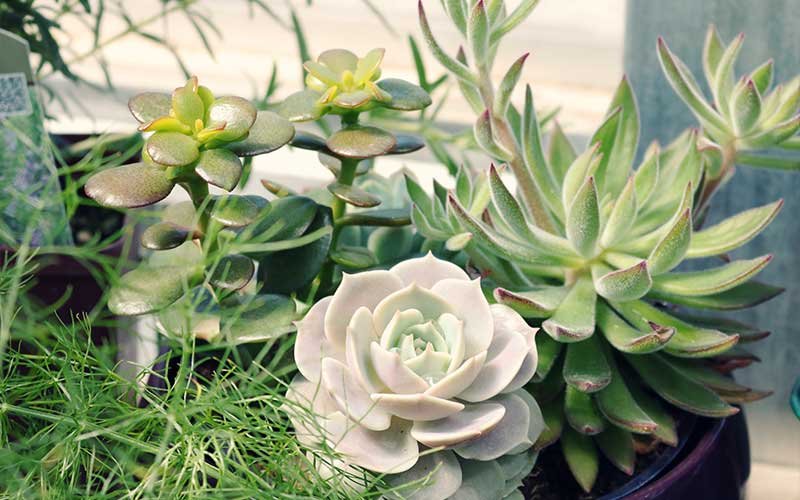
Echeverias can be a great addition to your centerpiece, garden, or bouquet. Aside from having a unique appearance, they can thrive on their own. They are commonly green, however, echeverias are also available in red, white, and pink. Hence, they are perfect for any type of arrangement. Echeverias epitomize stunning beauty and gracious flexibility.

The Succulent Clear Dish garden design features the charming Echeveria succulents in varied colors. They are arranged nicely in a clear dish so the layers of sand and soil can be seen. This fascinating succulent ecosystem can make us feel that we can shine despite having complex layers.

Cacti Succulent Rock Garden

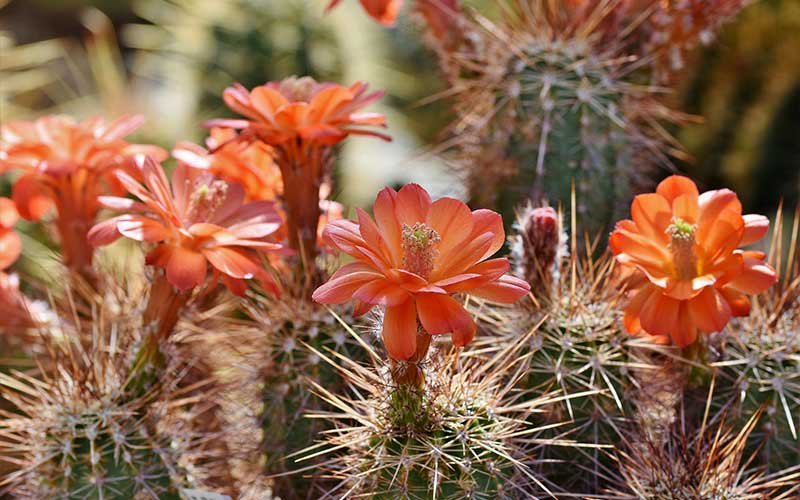
Cactus signifies endurance since it has the ability to withstand the test of time and various elements. The cactus flower is a reflection of a mother’s unconditional love since it can thrive even in severe conditions. If you have a friend or a family member who is experiencing a difficult time or having some struggles in achieving their goals, then you can give them a cacti garden.

The Cacti Succulent Rock Garden is composed of cacti combined with other types of succulents in different shapes. These succulents are planted in a feather rock, making them look magical. It is the perfect centerpiece that can brighten up your home.

Cacti Succulent Rock Garden

Coral Cactus Underwater Garden

The coral cactus signifies that you have to make deep and thoughtful modifications in your work. Throughout the years, you have been working so hard both personal and professional. The coral cactus garden is a perfect reminder for us to enjoy life. The coral cactus is a strange-looking plant that looks like an underwater coral. But in reality, it is actually composed of two succulent plants that are merged together, making them look like a stunning underwater coral plant.

The Coral Cactus Underwater Garden reminds us that everything is going to be alright since things are coming in your way just as you want them to be. Coral cacti are absolutely resilient, perfect for succulent beginners. They might look a bit weird, yet they can invigorate any room in your house. Keep in mind that they require bright light.

What Does Succulent Signify in Other Cultures?

Are you having a hard time finding the perfect gift for a loved one? Since you want to make them feel special and make this day a memorable one, then the best gift that you can give them are succulents. A box of succulents is something that they will treasure for the rest of their lives since it shows your true feelings.

Aside from having a striking appearance, succulents also include interesting meanings giving you the chance to reveal your true feelings towards the people that you love. But do you know that succulents have different meanings in different cultures?

For the Native American Indians, they believe that cacti are the symbol of protection and endurance. Furthermore, this plant can also bring good fortune and luck to the owner. Since cactus has the ability to thrive and survive even in tough conditions, then this is the perfect symbol of a mother’s love. So, if you are looking for a unique gift for your mom, then cactus is an excellent option.

Feng Shui believes that bringing succulents into your home can protect you against evil and negatives vibes. Succulents such as crassula can also provide good fortune to its owner. In Japanese culture, succulents are used as a way of revealing their true love towards another person.

Generally, succulents are popularly known to represent strength, persistence, and enduring love. Hence, if you want to express your unconditional love towards someone special, then give them succulents.

What Does Succulent Signify in Other Cultures?

Caring for Your Succulents

Since succulents have the capacity to preserve water, then they can survive even in dry climates. They won’t even mind if you neglect them for a while. That is why they are ideal for indoors. Also perfect for those who are looking for low-maintenance plants. Most people think that succulents only consist of cacti. However, this is just a misconception. Cacti are just one of the thousand species of succulents.

Succulents are flexible and tough, but some types of succulents work best in bright light. Hence, it is ideal to place them near a windowsill or a glass door. You don’t have to water them more often, once a week is fine. Your succulent pot or container must have sufficient holes so it can drain well. Having succulents in your home can uplift your spirits. The beauty of succulents can really capture everyone’s hearts. They do not only look attractive, yet they also have deep meanings.

Whether you are looking to decorate your living room, patio, or garden, choosing succulents can add life and energy to the area. Always include some succulents on your interior and exterior design.

If you want to learn more about succulent arrangements, then you can let us know in the comments below. If you have any questions about succulents, then we would be happy to share our knowledge with you. We want to help you enjoy while caring for your succulents. Reach out to us now.
Everything There Is to Know About Succulent Symbolism

Everything There Is to Know About Succulent Symbolism

Succulents are a group of plants that are mainly identified for its thick, fleshy leaves and stems which are used for storing water. There are different kinds of succulents. Although they vary in their structure, yet they share the same characteristics.

They can survive for a longer period even in arduous conditions. There is a large variety of succulent plants. Some of the most popular ones include aloe, cactus, asparagus, snake plant, spider plant, lucky bamboo, monsters, peace lily, etc.

Succulent plants can efficiently absorb and retain water, which means that they can still survive even if you plant them on the most water-deprived areas. Hence, it is not surprising that succulents are commonly associated with water. The fact is, there is no other plant that can retain water as succulents do. All living things require water to survive.

What is the Symbolism of Succulents?

Succulents are a great source of symbolism due to their longevity and ability to survive even in difficult conditions. Succulent plants are best known for their incredible and distinct characteristics. They can survive in any type of conditions. Also, they can effectively retain water which is essential for its survival. Since they are rich in water, then they can keep their bodies healthy.

Succulent plants can represent a lot of things including tenacity, determination, life, endurance, perpetual love, eternal relationships, longevity, perseverance, good fortune, peace, yearning, wealth, devotion, growth, loyalty, focus, survival, love of nature, prosperity, and many more. Succulent plants signify a lot of things to many people. Here are some of them:

Persistence

Surviving in this challenging world is not easy. Succulents such as cacti show us tenacity and determination. These plants can thrive and reproduce new plants even from the droppings of their leaves.

This is a great reminder for us that even if we are in the darkest situations of our lives, we should not give up. Anything can be possible. Having determination and the right attitude can help you succeed after suffering the worst things in life. Succulent plants do not avoid suffering, yet they thrive to survive.

This is why cactus plants are often used in meditations to help us motivate. They can also help those who are experiencing a painful period in their life.

Persistence

By seeing how tenacious and highly surviving succulents are, it helps us realize that we should not be easily discouraged by any negative situations that will come our way. The most important thing is to stay focused and determined with your goals in life.

Keep reminding yourself that you are capable of doing something meaningful and extraordinary in your life if you just live life and endure difficult situations. If you desire to become better, then you must have the right attitude and the determination that you can successfully change your life.

Eternal Love

Since succulents can survive for a long time, then it can be associated with love and relationships. These plants represent enduring, perpetual, and unconditional love. During ancient times, cacti represent the people who were waiting for the return of their loved ones. It was the power of their strong love that kept them standing even if their mortal bodies are long gone.

Nowadays, succulents are used as a symbol of strong love. They can also be used to represent forgiveness, making them an excellent “I’m sorry!” gifts.

Succulent plants can withstand any harsh conditions. They can survive anywhere most especially in areas where most plants are struggling to thrive.

This is why succulent plants are considered as the perfect symbol for unconditional love. It could be between lovers or the relationship of a mother to her children. They will fight for their love no matter what difficulties might come their way.

Having succulent plants in your life is a great sign that you can experience eternal love in the coming days. You will be loved for who you are. Perhaps you will meet someone who can bring happiness into your life. Someone who will stay with you forever. It can also signify that life will come your way.

Growth

Not all plants can survive in harsh conditions. They won’t be able to thrive due to insufficient nutrients and minerals which are needed for their growth and survival. However, succulent plants can grow and develop for a long time because they have water stored in their leaves and stems. They can survive through different seasons since they are well known to efficiently store water. This is one of their distinct characteristics which makes them what they truly are.

Growth
Realizing how succulents were able to thrive will help us realize that we too can survive most especially during those difficult times. It shows us that we could be whatever we want to be as long as we have the desire and the determination.
The presence of succulents is a symbol that we are going to rise above it all most especially during those challenges that come our way. We can be productive and valuable. With succulents, there is no end to its growth. This means that you can continuously grow and develop so you can enjoy a better life.

Tranquil Living

Succulent plants are distinct in such a way that they can survive even in harsh conditions. This means that it symbolizes peace and healthy living. They are known to survive in areas where most plants can’t. Because of this, succulents help us realize that our life is worth living.

Succulent plants also represent good fortune and goodwill. This means that you can choose to live your life peacefully. Good fortune will come your way so do not hesitate to make the best decisions in your life. Always be ready to create a big difference in your life.

Although succulents are not tall, yet they symbolize beautiful and incredible things. At Eden Succulents, we can help you care and grow your succulent plants. We can provide you some tips to inspire you in growing your succulent collection. If you need any information about succulents, then just let us know in the comments below.

How to Care for Echeveria Purple Pearl

How to Care for Echeveria Purple Pearl

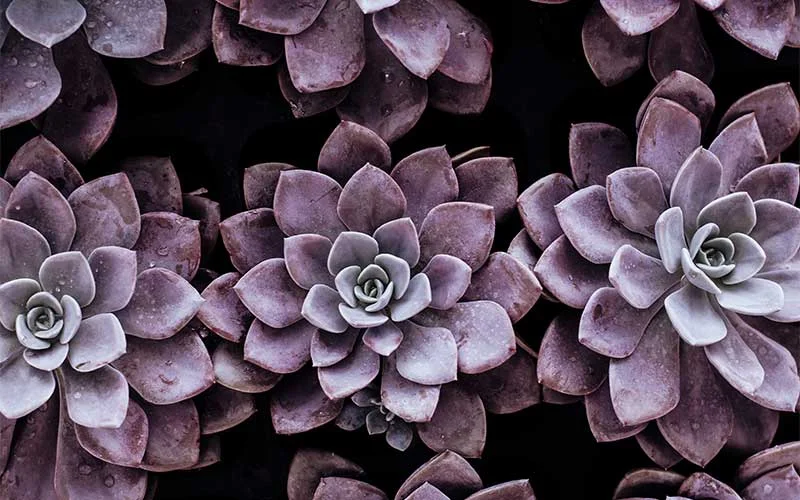
Succulents are commonly used in gardens if you want to add a splash of color, beauty, and uniqueness to any garden or landscape. If you are searching for a beautiful succulent that can be added to your succulent collection, Echeveria Purple Pearl is perfect for you. If you love flowers, this succulent is an excellent choice because it produces beautiful rosettes that will stand out in a garden full of green plants and it can be a great addition to your xeriscapes or indoor succulent garden.

Echeveria Purple Pearl is one of the most common echeveria species because of its beauty and a lot of gardeners love how it forms a gorgeous rosette that can grow up to 12 inches (30 cm) in diameter. This succulent is a native plant to Mexico. It has fleshy, pointed, and slightly round leaves with colors ranging from olive green to lavender-rose and complemented with pink-colored edges. If you are planning to grow this succulent, you must expose it to enough sunlight because echeverias love the full bright sun. The more sun exposure it gets, the more colorful it produces. It is known to grow up to 1 foot (30 cm) tall flower spikes and blooms coral-pink flowers during the warmer months.

Echeveria Purple Pearl
The Echeveria Purple Pis considered hardy in USDA zones 9a-11b. It can withstand temperatures that range from 20 degrees Fahrenheit up to 50 degrees Fahrenheit or (-6.7 degrees Celsius up to 10 degrees Celsius).

How to Care for Echeveria Purple Pearl

The Purple Pearl is an evergreen plant and grows low and near to the ground. It can grow up to 6 inches in height (15 cm) and 12 inches in width (30 cm). It prefers sandy, well-draining soil and loves the sun and tolerates partial shade. If you are planning to grow it indoors, you can use grow lights like this. Avoid placing it in dark corners or shaded areas as it can become etiolated and leggy. Once the plant has established itself, it will need occasional watering during the hot season. Keep it dry during the cold winter months as it experiences winter dormancy.

Echeveria succulents are one of the most popular succulents grown by gardeners all over the world because they are not complicated to grow. You just have to follow some basic rules such as:

When watering the succulent, do not allow the Echeveria Purple Pearl to sit in water as it is prone to rot or fungal diseases that can cause the plant to die. Avoid overwatering as well! You must use well-draining soil and a terracotta container that has drainage holes to allow better draining of water. Echeveria Purple Pearl will be fully grown in just 2 years.

Echeveria Purple Pearl has a more intense purple color than the Echeveria Perle Von Nurnberg. It also has silver edges that make it a standout among the other Echeveria species. This plant is deer-resistant and drought-tolerant, making it a perfect addition to any outdoor garden or landscape.

Echeveria Purple Pearl has a more intense

Maintenance

Remove dead leaves at the bottom of the plant to maintain its appearance and allow it to grow healthy. Pests can also use the dead leaves as a hiding place. Echeveria succulents are susceptible to mealy bugs. Make sure to be careful in watering and expose it to enough sunlight every day.

Propagation

Echeveria Purple Pearl is easy to propagate. You can propagate it by using seeds, leaves, and stem cuttings. When propagating using a leaf, make sure to remove it gently from the parent plant. Choose a fleshy leaf so it can produce roots after a few weeks. Allow it to dry first before placing it on top of a succulent/cactus soil mix and cover it with plastic until the new plant has grown. Allow the roots of the new plant to be established so that it will grow healthy before transferring it in a different container with succulent potting soil.

Repotting

Repot the Echeveria Purple Pearl Succulent during early spring or summer time. Check if the soil is dry before repotting the plant. Remove the old succulent/cactus soil mix from the roots and remove any rotten or dead roots. Inspect for any pests that hide in the roots to prevent an infestation from spreading to other plants.

If the succulent has any cuts, treat it with a fungicide. Use a new potting soil and make sure to use a container with drainage holes. Rejuvenate the plant every 3-4 years during early springtime; you can clip or cut out dry stems and old leaves and repot any offsets in a different container using a succulent potting mix.

Uses

The Echeveria Purple Pearl can be used in floral arrangements, wedding bouquets, and containers. This succulent can be placed in patios and planted in pots or terracotta containers. It can also be mixed with perennial plants in beds and borders. You can also add it in an indoor succulent garden and plant it in a 4-6 inches container. It is an ideal houseplant; you can place it at a windowsill so it can get enough sunlight exposure daily.

Pests and Diseases

Watch out for mealybugs, vine weevils, and aphids. Avoid overwatering as it can cause root rot or fungal diseases.
Pests and Diseases

Always check the succulent for pests. If you found some, make sure to separate or quarantine it from other plants to avoid the spreading of pest infestation. Pests usually hide in the places where the leaves and stem meet and they also hide under the soil and can be often found in the roots of the succulent.

Treat it with insecticide soap like this and place the plant in the shade because it can have sunburn if exposed in direct sunlight after the application of the insecticide soap. Mealybugs can be common in echeverias, you can use a cotton applicator dipped in 70% isopropyl alcohol and apply it in the affected areas. If you want more information on how to deal with succulent pests and diseases check out our website www.EdenSucculents.com.

Have you heard of the succulent Echeveria Purple Pearl? If you want to know more information about it, you came to the right place! Eden Succulents always aim to share guides and information about different types of succulents. If you are looking for information about a specific succulent, check out our website. Please let us know if you have any comments, suggestions, inquiries, or questions about succulents, we would like to hear your thoughts!

Natural Terracotta Round Fat Walled Garden Planters with Individual Trays

Natural Terracotta Round Fat Walled Garden Planters with Individual Trays

  • natural terra cotta material. Each measures 3.25″ H x 4.5″ diameter or 3.5″H x 5.25″ diameter with tray
  • machine pressed, kiln fired
  • hand inspected with a drain hole
Garden Safe Brand Insecticidal Soap Insect Killer

Garden Safe Brand Insecticidal Soap Insect Killer

  • FOR ORGANIC GARDENING: Can be used up to day of harvest – OMRI (Organic Materials Review Institute) Listed.
  • KILLS BUGS THROUGH CONTACT: Controls aphids, mealybugs, mites, leafhoppers, psyllids, scale insects, thrips, whiteflies and other listed pests.
Mountain Falls 70% Isopropyl Alcohol First Aid Antiseptic for Treatment of Minor Cuts and Scrapes

Mountain Falls 70% Isopropyl Alcohol First Aid Antiseptic for Treatment of Minor Cuts and Scrapes

  • First aid antiseptic
  • Topical antimicrobial
  • For treatment of minor cuts and scrapes
  • Not tested on animals
Why Do Succulents Die After Blooming?

Why Do Succulents Die After Blooming?

Wouldn’t it be exhilarating to watch your succulents flower? It shows that your succulents are healthy and strong. But the question is, will your succulent die after it blooms? Yes, but not all of them.

Do All Succulent Varieties Bloom?

No, not all of them produce flowers. Some succulents will take years before they can bloom, while others do not bloom at all. Some succulent species will bloom even during the early stages. However, other species will wait for its maturity period before they are ready to bloom.

Some of the reasons why a few succulents fail to bloom are environmental issues and growing conditions. However, there are things that you can do to help your succulents bloom. You need to provide them with plenty of sunlight and the right temperature. You should grow them in an environment that is similar to their natural habitat.

How to Make Your Succulents Bloom?

Healthy plants have greater chances of flowering. Hence, it is very important to provide them with a proper environment where they can grow and thrive. Some succulents and cacti require sufficient sunlight so they can bloom. Be sure to expose them to sunlight for at least five to six hours daily.

There are a few plants that only bloom once then they die afterward. This includes tomatoes, sunflowers, etc. These plants will grow, develop some flowers and fruits, then they will eventually die. Perhaps, this entire life cycle will last for a year. But there are also some plants which take several years before they bloom and ultimately die afterward. Sometimes it is frustrating to see your plant die after having a single bloom. These types of plants are also known as monocarpic plants.

Monocarpic is a combination of the words “mono” and “karpos.” Mono means single while karpos means fruit. Monocarpic plants are those plants that only bloom once before they die. Plants that can bloom more than once are known as polycarpic.

Why Do Monocarpic Plants Die After They Bloom?

The reason why plants bloom is to generate seeds for their reproduction. Monocarpic plants consume a lot of energy when they bloom. Because of this, they can’t continue to grow and prosper because they have lost so much energy. Most of these plants will eventually die. But with monocarpic succulents, death is not the end of it.

Monocarpic Succulents

Agave

Monocarpic Succulents

One of the most well-known monocarpic plants is Agave. You may not be aware of it, but agave takes a lot of years before they bloom then they die. Agave Americana will take several years before it blooms and then dies. But not all agave varieties are considered as monocarpic.

If you are growing a monocarpic Agave, then don’t worry since most of them will grow numerous offsets or “pups” on the stem or at the base of the plant. These pups will continue to grow and thrive even after the mother plant dies. They will grow on the same stem and root structure.

Some monocarpic succulent plants do not truly die after they bloom. In the case of Agave, it is just the main plant that dies but not the plant itself.

Sempervivum

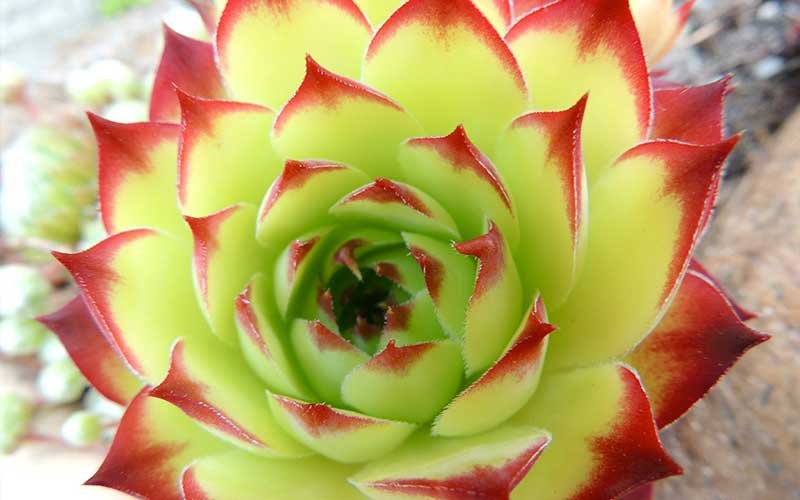
One good example of monocarpic succulents is sempervivum. It will die after its flowers fade. Sempervivum implies “always living” so why does it die after it blooms? Sempervivum is popularly known as “hens and chicks.” This is called as such because its large rosette will produce several tiny rosettes around it. Typically, a “hen” can grow between three to four years before it will finally bloom. During this time, it will generate lots of smaller rosettes around the large rosette.

Finally, when the large rosette bloom, it will die. The good news is your container, or your garden won’t be empty since the smaller rosettes will continue to grow and prosper. Time will come that each of these smaller rosettes will grow and bloom, then die.

But before they die, they will produce their chicks as well. If you are growing a sempervivum rosette in a container, and it generates dozens of rosettes, then you did not lose the plant after the large rosette died. The fact is, you have even gained more succulent plants.

Kalanchoe luciae

Most varieties of Kalanchoe species bloom the entire seasons. There are only a few of them which are considered monocarpic. Kalanchoe luciae and K. thyrsiflora are both monocarpic. These monocarpic succulents share the same characteristics with agave since they will produce numerous pups at the base of the plant. These pups will continue to grow and thrive even after the main plant has died after blooming.

Yucca

Yucca

Some yucca varieties and a few species of aeonium are also known as monocarpic succulents. But they are quite different compared to the other types of monocarpic succulents. Aeonium and yucca varieties will grow branches as time goes by. When they become mature, they will look like a tree with a rosette of foliage at the end of each branch.

Throughout the years, some of these branches will bloom. These blooms can last for months before they will fade away. After its blooming days are over, the branch will not bloom again. However, the rosettes below the branch will continue to thrive. They will form new branches and rosettes.

Hence, when it comes to monocarpic aeonium and yucca varieties, the whole plant will not die after blooming, it’s only the branch. Even some of its branches will die, new ones will arise. This means that the plant will continue to survive.

Remember that not all yucca varieties are monocarpic. Also, those which are monocarpic do not truly die after they bloom. Even if a single branch dies after it blooms, the rest of the plant will continue to grow and prosper.

At Eden Succulents, you can find lots of information about succulents. We can provide you the best tips in growing and caring for your succulents. If you are interested in monocarpic and polycarpic succulents, then leave us a comment below!

Why Succulents Stretch and How to Fix These

Why Succulents Stretch and How to Fix These

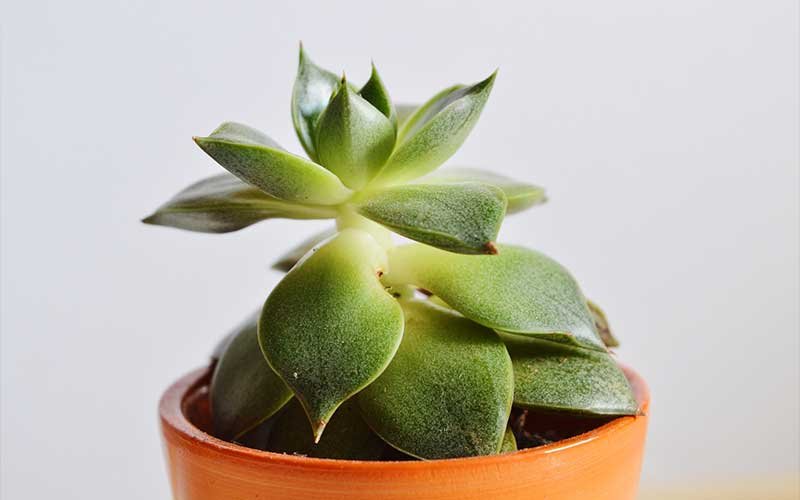
Is your succulent is growing tall, thin and stretched out? Most succulent growers encounter this once in a while. If you’ve experienced this as well, you may have noticed your plant looking paler than it used to be. It may also be dramatically leaning over to one side. What you have is an etiolated succulent.

Succulents are slow-growing, but they quickly stretch out when they are not getting the amount of light they need. This can seriously damage your plant, and can even lead to death. The good thing is that etiolated succulents can be fixed, and your succulents can be happy and healthy again. Let’s take a closer look at etiolation, the factors that cause it, and how to fix your etiolated succulents.

What is Etiolation?

Etiolate means to grow a plant under insufficient sunlight, which results in weak growth, paleness, and often thin and stretched out. According to the Oxford English Dictionary, etiolated plants are “pale and drawn out due to a lack of light”.

When there is no light, plants cannot form chlorophyll, a substance that gives leaves their green colour and the key for allowing plants to absorb energy from the sun. Without lights, plants are pale green and weak. While some plants are grown with all access to sunlight deliberately blocked, such as white celery and white asparagus, succulents do not benefit from etiolation in any way.

Why do Succulents Need Sunlight?

Succulents rely on sunlight for photosynthesis, the process where they convert energy from sunlight, water, and carbon dioxide into energies they can use, like sugar and starch. Essentially, plants convert sunlight into carbohydrates that fuel their growth and support the development of new leaves and roots, flowering, and reproduction.

The carbohydrates fuel the plant’s life cycle. So basically, all living things rely on photosynthesis because animals and humans are dependent on plants for food and oxygen. And at the centre of this is sunlight.

Stretching for Light

We tend to think of plants as immobile and passive, but that’s just how they seem. While plants cannot move as fast as animals, or get up and walk somewhere with better sunlight, they have developed ways to make the most of the light they get. Plants change the orientation of its leaves to get more light into its surface. It will use its energy to grow quickly, stretching to get more light.

How Will You Know if Your Plant is Stretching For More Light, or Merely Sprawling Out?

An etiolated succulent has a weak stem that is soft and bendy. It has a pale colour, and its leaves are pointing down. The gaps are vast between the leaves. On the other hand, if your succulent is naturally leggy, it shouldn’t appear stretched out. The colour will remain vibrant, and the long stems can support the plant.

Etiolation often happens indoors, but it can also happen to plants that are outside. As long as it does not receive sufficient light, your succulent will stretch out. If your plant is grown outside but is in the shade or is surrounded by taller plants that are blocking the sun, it will still stretch.

How Will You Know if Your Plant is Stretching For More Light, or Merely Sprawling Out?

How Much Sunlight Do Succulents Need?

Succulents need about 4-6 hours of sunlight every day to grow and thrive. They do need a lot of light, but most types cannot handle a whole day of direct sunlight. When you see the leaves of your succulents starting to droop, move them into more light. As long as the leaves are drooping, continue giving them more light. Make sure to change the amount of light they get gradually. Be careful with adding too much light quickly as it can cause the leaves of your succulents to sunburn.

How to Fix Stretched Succulents

Unfortunately, once your succulent stretches, it will no longer go back to its natural form. Once you see the first signs of etiolation, provide it with more light, so it doesn’t stretch out further and for the new leaves to grow closer together.

But while you can’t undo the stretching of your succulents, there’s a way to make it look compact again. You can cut the top rosette from the stem, remove its lower leaves, and then replant. Make sure you leave at least an inch in the base, with about 2-3 leaves. The leaves will absorb the sunlight and will make offshoots emerge faster.

Remember to let the base and the cutting dry out for a few days before replanting them. The cutting will start to grow roots within a couple of days to over three weeks, and produce offshoots within a few more weeks.

Usually, the leaves you left on the base leaves will fall off or die, but the new rosettes can still survive without the parent leaves.

The next time you see your succulent stretching out or dramatically leaning to one side, you’ll know what to do! If you have other tips on how to fix etiolated succulents, we’re more than eager to know about it, so please let us know in the comment box below!