skip to content
Eden Succulents
Learn How to Care For Your Succulents During Winter Months

Learn How to Care For Your Succulents During Winter Months

Succulents make every space charming and colorful, so there’s no wonder why they’ve become trendy over the years. They’re also low-maintenance, which makes them the perfect houseplant for everyone. However, they still need proper care and attention, especially during the winter. Certain varieties of succulents are vulnerable to the cold weather, so you need to take extra care of them so they can be as charming when spring comes. Protect your succulents from the cold weather with these tips.
Learn How to Care For Your Succulents During Winter Months

Find Out if You Have a Hardy Succulent

There’s a whole world of succulents that can survive subzero temperature in four seasons and be outdoors year-round. These succulents can thrive under snow and ice and emerge looking just as good the next year. Hardy succulents can add color and charm to any garden year-round in most parts of the world.

Most stores label their plants with zone designation based on the USDA Plant Hardiness Zone Map. The labels will tell you whether your plant will survive the winter in your zone. If you live in a zone that has an annual temperature lower than the recommended zone on the label, there’s a high chance that the plant will not survive the winter in your area.

Bring Them Indoors

Even if your succulent matches your zone, it’s still best to bring it indoors during winter. It’s rare for the temperature to drop excessively, but one cold night can harm your succulent severely. If the temperature in your garage doesn’t go below 50°F, you can store them there.

But make sure your succulents get 3-4 hours of indirect sunlight every day. Before taking them indoors, see to it that there are no mealybugs and aphids in your plants to avoid bringing them inside your home. To get rid of these pests, spray the leaves of your succulents with a solution of ¼ water and ¾ rubbing alcohol.

Many people overlook this but make sure to prepare your pots for the indoors as well. If your succulents have stayed long in your garden, then they’re probably covered with dirt. So, before you take them inside your home, remove dead leaves and debris from the pot to avoid getting them all over your house. Next, wipe off any dirt from the pot, and finally, check for bugs and get rid of any that you can find. The last thing you want is having crawlers inside your home.

Water Them Less in Late Fall

During winter, succulents typically go dormant, so make sure to water them lesser during late fall. Once the temperature starts to drop and the nights become longer, reduce the watering to once a month. But it’s best to check the moisture level of the soil before you water your plants to make sure that it is completely dry.

Watering them for five minutes is enough. Check that your pots or containers have good drainage because your succulents will die if their roots remain damp for a long time. Add sand to your indoor plants to help them drain well, and avoid overfertilizing the base of your outdoor plants so they will dry thoroughly.

Before you stop watering your succulents, check their varieties first. Although most succulents sleep in the winter, there are those that thrive in the cold months. The winter growers will need more water than the other varieties. Also, check the things near your succulents when you place them indoors because some of the items like heaters and dryers will dry your plant’s soil quicker.

Water Them Less in Late Fall

Make Sure They Get Enough Sunlight

One of the things you should consider when taking your succulents indoors is the amount of sunlight they will get while they’re inside your home during winter. The best thing you can do is to place them near the windows so they get sufficient indirect sunlight. For your succulents to be in their best condition, they must get at least 6 hours of sunlight daily. A succulent that doesn’t get enough sunlight will grow towards the direction of the sunlight. So, if you want to straighten them out, turn them the other way.

Cover Your Succulents

If it’s not possible to take your succulent indoors in winter, cover them up with several kinds of protection. You can use snow covers to protect them against the snow, frost, and harsh winds. There are several snow covers sold online and at your local plant store. If you have bushel baskets, they can also serve as a good cover for your succulents. Just make sure that you uncover them long enough for them to get sufficient sunlight and air.

These simple steps can help your succulents stay alive during the winter and be as radiant as ever during springtime. Pass this information to your succulent-loving friends so they can also learn how to care for their succulents in winter.
What Are Monocarpic Succulents?

What Are Monocarpic Succulents?

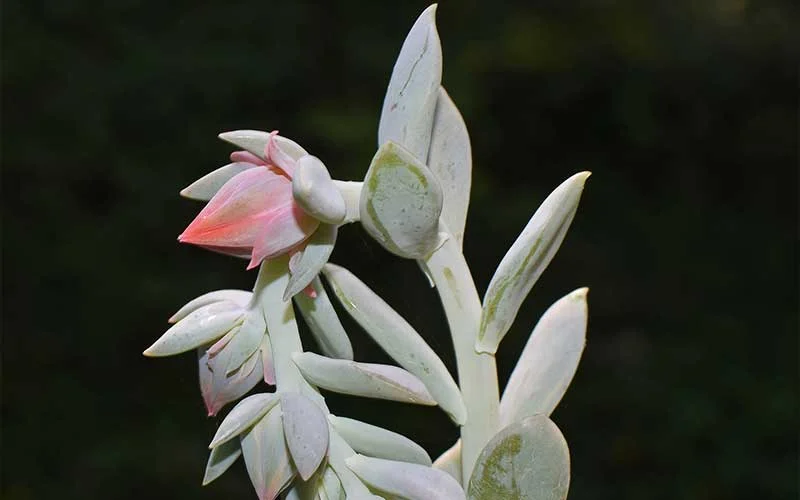
One of the most exciting things about owning a succulent is seeing it bloom. Succulent flowers are bright and beautiful and come in an array of colors like white, red, pink, purple, and yellow. When flower stalks start to show, it can be difficult to contain our happiness and can even make us impatient while waiting for it to bloom fully.

But sometimes, after our succulents produce the most stunning flowers, they wither and die. Has this ever happened to your plants? If yes, there’s no need to worry because it’s completely normal. Succulents that die right after their flowers bloom are called monocarpic succulents.

All monocarpic succulents flower then die, but there are things you can do to delay its bloom. In this article, you will learn about monocarpic succulents and how you can keep them healthy for as long as possible.

What Does Monocarpic Mean?

“Mono” is a Greek word that means single, while “Karpos” or “Caprice” means fruit. Monocarpic plants, as mentioned above, are those that bloom or produce fruits once then dies. Because of this, many people call the flowering moment the “bloom of death.” Plants that repeatedly produces flowers throughout their life cycles are called polycarpic plants, which means “many fruits” in Greek.

Monocarpic succulents die because they spend all their nutrients and energy on producing flowers. They use up all their resources for flowering because their flowers contain seeds that will help them propagate. Like most living things, the goal of a succulent is to reproduce, so it uses up all its energy for the production of flowers and seeds.

After producing flowers and seeds, monocarpic succulents are too depleted to sustain themselves, so they turn black and die.

But don’t worry, several types of monocarpic succulents live for years before they flower, like the Hen and Chicks. Some, like the Century Plant, may even take decades before they start producing flowers.

What Succulents are Monocarpic?

What Succulents are Monocarpic?

The three main types of monocarpic succulents are Agave, Sempervivum, and Kalanchoe. Not all Agave and Kalanchoe succulents are monocarpic, but all Sempervivum are.

Agave plants can live for 25 years before they bloom. When they are ready to produce flowers, it uses all its energy to produce thick stems that will be the last. These stems can grow up to 8 feet high. The dying process of monocarpic Agave succulents are slower compared to most of its kind. It can take a month to years before it withers and dies.

As mentioned above, all varieties of Sempervivum succulents, commonly known as Hen and Chicks, are monocarpic. But fortunately, they take around 3-4 years to bloom, so you can still enjoy them for a long while before they die. When they bloom, they also produce several offshoots to make up for their death.

There are certain types of succulents, like some varieties of Aeoniums and Yucca, that don’t die immediately after producing flowers, but they are still considered monocarpic.

It can get confusing at this point since we have already made it clear that monocarpic succulents die after flowering. But these special varieties of monocarpic succulents also die in a sense, when their branches that flowered fall out. Their branches produce flowers one at a time, so the plant remains alive because as long as it still has branches that thrive.

How Do You Know if Your Succulent is Monocarpic?

One easy way to find out whether your succulent is monocarpic is to look at its flowers. If the flowers are emerging from the center of the plant, then it is likely the bloom of death. If the flowers are blooming from the side of the plant, then your succulent is not monocarpic. If so, you can clip off the flower when it withers.

How Do You Know if Your Succulent is Monocarpic?

Can You Prevent a Monocarpic Succulent from Dying?

As mentioned above, there are monocarpic succulents that don’t die. But what do you do with those varieties that immediately die after flowering?

It is uncertain whether you can prevent monocarpic succulents from dying. Some gardeners have been successful in keeping their monocarpic plants alive after flowering, but those are rare cases. Taking good care of your succulents can delay their flowering. Succulents that are under stress are likely to bloom early in hopes that their seeds will grow in better condition, so give your plants enough sunlight and water.

You can try to extend the life of your monocarpic succulent by cutting off the flower stalks once you see them coming out.

What Should You Do After the Bloom of Death?

Once you see your monocarpic succulent start to bloom, the best option is to harvest the offshoots and plant them as is. But you can also save the seeds from the flowers and grow them in different containers.

When your succulent is blooming, make sure to give it your usual care so it won’t get stressed. It would also be great if you’d let your succulent take its natural course. Enjoy its flowers as they bloom, and take care of its offshoots, so they grow as charming as their parent plant.

We hope this post was helpful to you. If you know of any other types of monocarpic succulents, please let us know in the comment section below. Enjoy planting!

A Beginner’s Guide to Watering Your Succulents

A Beginner’s Guide to Watering Your Succulents

You must know the proper way of watering your succulents. Undoubtedly, you are aware that succulents are a fad. And there is a good reason for this! These types of plants have interesting shapes, vivid colors, and are very versatile. This is why, a lot of people would use them as houseplants, home or wedding décor or as a garden plant. In this guide, we are going to teach you how to care for your succulents even as a beginner!

How to Water Succulents

Succulents are a unique type of plant which only needs minimal care to thrive. But when we say minimal care, this is different from no care at all. The fact is, succulents require less water compared to other types of plants. But how much water do they need? And when should you water them?

If you want to enjoy your succulents, then you should know how to water them so they can look healthy and beautiful. It’s hard to determine how often you need to water succulents. Rather, it would be much better if we will discuss how to recognize if your succulent requires water or how to know if you have overwatered them. Most people will tell you that it is very easy to care for succulents. Yet, why are there a lot of succulents that die? Of course, it is very easy to care for succulents, all you need is relevant information.

What Are Succulents?

Before knowing how to water succulent plants, you should first learn what succulents are. Succulents are a large group of plants that can survive in droughts since they have stored water in their stems, leaves, and roots. When drought comes, this stored water will be released so that it can be used by the whole plant. In this way, succulents can survive even severe climate conditions.

What Are Succulents?

When Should You Water Succulents?

Their ability to store water enables them to survive even when there is less water. Since this is a natural characteristic of succulents, we often assume that it is much better to keep your succulents extremely dry rather than excessively wet. Even if they can thrive in very dry conditions, it is still important to know when your succulents need water.

Always be aware of the signs that indicate that your succulents require some water. When we say that it is much better to keep them dry rather than wet, then it does not necessarily mean that you should never water them at all. It is a basic fact that water is a necessity for plants to keep them healthy. If the leaves of your succulents have already wrinkled, then it is a sign that your succulents need more water.

Once the stored water has been released and distributed to the entire plant, it is also important that you should replace them. Once the water has been diminished then the leaves will shrink. The leaves will no longer look chubby and firm, instead, they will shrink. This is an obvious indication that your succulent requires more water.

How Much Water Do They Need?

To keep your succulents healthy and to maintain its natural beauty, you should water them deeply. Afterward, give them some time to dry out. The key is to water them deeply when the soil has dried up. If you are using a container with good drainage, then you can place the container in a tray of water.

Do this for about five minutes, then remove it from the water and let it drain. Never water them again, wait until the soil gets dry. If you are planting your succulents on the ground or in a very large container that cannot be lifted, then you have to water at the soil line and not over it. You should not put your succulents in waterlogged soil.

Succulents should not be overwatered. You learn and keep an eye out for the signs that your succulents are already overwatered. Storing water in stems, leaves, and roots can make the succulents live even in dry soils. When the stored water is released, it will be replaced by the water that comes from the soil. This is very important to assure that the plants are healthy.

How Much Water Do They Need?

Typically, overwatering can rot the leaves as well as their roots. This can happen once you have noticed that the leaves have started to discolor and turned into translucent. The leaves do not look firm anymore. Instead, they are soft and spongy. When the leaves are damaged by little water, there is a chance that it can recover.

However, if they get damaged by too much water, then most likely the leaves will fall off from the plant. While there is still a possibility that it can recover from this condition, it will be difficult. You must save the succulent from its wet condition. If you can’t save an overwatered succulent, then the best alternative is to take its leaves and cuttings and start creating brand new plants.

How to Determine Your Plant’s Health

By simply looking at the plants, we can recognize its health. If the leaves of your plants have already shrunk or dried-up, then it is a sign that it requires some water. On the other hand, if its leaves are already soft, spongy, and has lost its color, then your plant is damaged by overwatering. However, there are some succulents wherein its leaves will regularly dry out as they grow.

This is quite common in most Hens-and-Chicks succulents such as Echeveria. Older leaves will become brown and will fall off. This is a natural part of its growth. Take note that these leaves did not shrink, instead, they just dried out. They did not lose its color, rather they just turn into brown. These leaves do not store water anymore. You can either wait until the leaves will fall off naturally or you can simply remove them so your succulents can look terrific.

At Eden Succulents, you will discover that growing and caring for succulents can be fun! Collecting different types of succulents is a wonderful experience. But be sure that you know how to care for them, especially when it comes to how and when to water them. Please share your thoughts about succulents in the comments below!

Everything You Need to Know About Planting Succulents Outdoors

Everything You Need to Know About Planting Succulents Outdoors

Succulents are the latest trends both indoors and outdoors. If you are planning to create a garden in your backyard, then you should include a few succulents. They can make your landscaping look incredible. Succulents are a popular choice because they are low maintenance. When incorporating succulents in your garden, be sure to choose the right ones.

Succulents can be quickly recognized by its fleshy leaves and fat stems which are used for storing water. They come in different sizes, shapes, colors, and flowers. If you are growing your succulents outdoors, then there are three important factors that you need to consider. These include temperature, amount of sunlight, and rainfall. Some types of garden succulents can endure mild freezes. However, some succulents cannot tolerate warm climates.

Generally, succulents need sun exposure for at least six hours. While others can look colorful when exposed to the sun for at least eight hours or more. Unfortunately, they can burn in intense heat, so you have to shade them during mid-day and afternoon.

Most succulents may not adapt well to changing climates. However, there are some types of succulents that you can plant in your yard which can make your garden look stylish. This includes Hens-And-Chicks, Stonecrop, Agave, Aeonium, Echeveria, Haworthia, Pigmyweeds, and Senecio. It is very important to properly care for them, so they can thrive outdoors. Here, we will give you some tips on how to grow succulents outdoors.

Give Them Enough Shade

You might not be aware of it, but some succulents cannot survive with full sunlight. The fact is too much exposure in the sun can burn them. While there are also some succulents which require some sunlight, so it is still advisable that you should give them sufficient shade. Some types of succulents which require shade are Hens-and-Chicks, Aeoniums, Lace Aloe, and Painted Ladies.

Give Them Enough Shade

Always Consider the Weather

Succulents can thrive well when the weather is fine. This means that it should not be extremely cold or too hot. This is why most succulent enthusiasts would choose to plant them in a container garden. In this way, they can easily bring them inside when the weather gets too hot or excessively cold. If you are planning to grow your succulents in container gardens, then you can put them in the shade before exposing them to sunlight.

Transplant with Care

When the weather gets cold, its best to bring your succulents inside. Some types of succulents can’t thrive in too cold temperatures. That is why it is recommended that you should transplant them into pots. However, transplanting succulents is not as simple as you might think. First, you have to put some small rocks at the bottom of the pot, so it will drain quickly. Repotting these plants will also require the right mixture of sand and soil. This can provide your succulents with proper nourishment, so when summer comes you can transfer them outdoors.

Water Them When Necessary

Most people are quickly attracted to succulents because they do not require too much watering. If you are growing your succulents on container gardens, then you can soak the soil with water. You have to wait until the soil gets dry before you have to water them again. This will probably take two to three days. Sometimes it will also depend on the climate.

If you plant your succulents on the ground, then you can water them at least once a week. You don’t have to completely soak the ground with water. Keep in mind that when it rains, you don’t have to water them. Only water them when needed. Always avoid overwatering them.

Water Them When Necessary

Use Containers With Proper Drainage

If you are growing your succulents on container gardens, then it is important to have proper drainage. Be sure to put some small rocks at the bottom of your container. There should be a hole at the bottom to prevent overwatering. It is best to place your pot on a plant stand so there is a way for the water to drain. If you place your succulents indoors, then you should put a dish beneath the pot.

Choose the Best Soil

It is essential to choose the right type of soil for your succulents. If it is your first time to plant your succulents in the garden, then it is best to use a superior potting mix combined with pebbles. The depth of the hole that you are going to dig will likely depend on the size of the plant. To provide sufficient nourishment to your plant, be sure to give them fertilizer or compost mixture.

Provide Them Enough Space

Succulents can look great in any garden. They grow slowly and it is essential to give them some space to grow up so they will not grow out. Succulents must not be placed beside a flowerbed since they have distinct ways of watering. If you are growing several succulents in your pot, be sure to keep them one inch apart. If you place them extremely apart then they won’t grow healthy leaves and stems. Instead, they will grow more roots. If you space them correctly, then your succulents will look more appealing.

Test Your Soil

Before you start building your succulent garden, be sure to test your soil first. Having a test can help you determine if you are using the right kind of soil. You have to pay a certain amount to get your soil tested. Or you can do it yourself by purchasing kits which can be found in local garden stores.

Conclusion

Succulents can add beauty to your landscaping. They are low maintenance, but they need to be cared for properly. We hope that these tips can help you in growing your succulent outdoors.

At Eden Succulents, you will learn how to care and grow your succulents properly. We will give you the latest and most accurate information about succulents. As much as possible we want you to have fun while caring for your succulents. If you need some help in growing your succulents outdoors, then let know in the comments below.

What Are the Most Popular Types of Succulents?

What Are the Most Popular Types of Succulents?

Succulents are the latest trends in home décor as well as at weddings. They can be used as a centerpiece, a terrarium, hanging plant or simply as a houseplant. They do not require a lot of water, making them perfect for drier climates. Hence, most of these succulents originate from warm areas such as Africa or Central America.

Since they store water in their thick leaves, then they can survive in the sun for a long period with not much water. At the same time, they can also survive well during higher temperatures. If you want to create your succulent garden, then you can have a variety of options. The fact is, you can even add a new succulent each day to your collection. The choices are endless.

Succulents are very popular because they can live longer and do not require too much time or effort to maintain. This is why they are ideal for those who are working all day or for those who do not have extra time to take care of plants. No matter what type of succulent you choose, they can make your home and gardens look elegant.

Although they are small, they look very adorable and can thrive in dry temperatures. With succulents, there are over 60 various plant families that you can choose from. Additionally, there are even some plants out there which you do not recognize that they are a succulent variety as well. Some of these include the ZZ plants and snake plants.

Furthermore, whether you are looking for the best plants for your indoor garden or you are searching for some addition to your succulent collection, we will give you some of the most popular succulents out there. They come in different styles including the rabbit succulent, the colorful moonstone succulent, the glittering echeveria, and many more.

Aloe Vera

Aloe Vera
Aloe Vera is one of the most popular succulents that is well known for its medicinal benefits. These plants are commonly found in tropical areas. The compounds of Aloe Vera plant can be used for curing burns, irritation, and scratches. That is why, it is a common ingredient for skin lotion, burn ointments and other types of cosmetics. They can also look great indoors. Aloe Vera has thick pointed leaves with white spots.

The size of Aloe Vera plants vary significantly. Some are just a few inches tall, while others can reach up to 20 feet. The leaves of Aloes are filled with gel and have sharp edges. It can produce flowers from its tall stalks. The flowers can either be in red, yellow, or orange and it can appear from mid-winter to summer. During cold temperatures, it is more suitable to move them indoors. Most people are familiar with Aloe Vera since they are commonly seen on skincare products.

Burro’s Tail

Also known as Sedum Morganianum or the donkey’s tail, these succulents consist of teardrop-shaped leaves that flow down at the edge of the pot. They resemble a hanging plant. This is why it is called Burro’s Tail since it looks like the tail of a burro or a donkey. It belongs to the same plant family as the cacti. Its length can reach four inches.

Most people choose this type of succulent plant because it is very easy to care for and propagate. This is one of the most popular succulents to grow indoors. Be sure to place them in a well-draining container. It’s best to hang them so its long stems can just flow down on the edges of the pot. You just need to water them once a week and provide them with sufficient light.

Snake Plant

Discover some of the most popular types of succulents including Aloe Vera, Snake Plant, etc. Learn some information and tips on how to grow and care for them.

This is the perfect plant that you can grow indoors. A snake plant can purify the air inside your home. It is also one of the best low maintenance plants since it can thrive even in poor lighting. They don’t mind if you don’t water them more often. This means that this plant can still survive even if you neglect them. Snake plant is ideal for those who don’t have time in taking care of their plants.

These plants can be grown indoors where there are a bright light and warm temperature. Although, they can still survive in low light and humidity.

Jade Plant

Also known as Crassula Ovata, this succulent resembles a bonsai plant. They look like a miniature tree with a chunky trunk and thick, dark green leaves. Other varieties of the jade plant have a red color on the tips of its oval-shaped leaves. By the time that the plant has already matured, they can produce lovely pink or white flowers that have a star shape. However, if you place them indoors, then they will seldom bloom. Although the jade plant is best for indoors, they can also be planted outdoors when the climate is mild.

Crown of Thorns

Otherwise known as Euphorbia Milii, this succulent is one of the greatest houseplants since it can adapt to the room temperature. Place this succulent close to the window so it can obtain 3 to 4 hours of sunlight each day. It does not require frequent watering you only need to water them when the soil has completely dried up.

Although this succulent has a scary name, it is a beautiful indoor plant that can easily adjust to the indoor climate and environment.

Flaming Katy

Flaming Katy
Also referred to as Kalanchoe Blossfeldiana, this type of succulent originated from Madagascar. It is one of the most common houseplants that are well suited for indoors since they are very sensitive to cold temperatures.

You can grow them in pots with holes at the bottom for better drainage. Be sure to provide them with 8 to 10 hours of sunlight each day so they can produce lots of buds and flowers. It’s best to place them on the windowsill so they can obtain the sunlight that they needed.

During the early winter and late autumn, it can produce a variety of colors such as gold, white, and dark red. A perfect succulent to act as your centerpiece, Kalanchoes can be easily identified since they are usually sold in nurseries, supermarkets and even on home improvement centers. Although they are more suitable for indoors, they can also be grown outdoors during milder climates. Their flowers can last from fall to winter.

If you need help in growing and caring for your succulents, then Eden Succulents can help you. We have dedicated ourselves to helping you grow your succulents while having fun.