skip to content
Eden Succulents
Choosing the Best Soil for Your Succulents

Choosing the Best Soil for Your Succulents

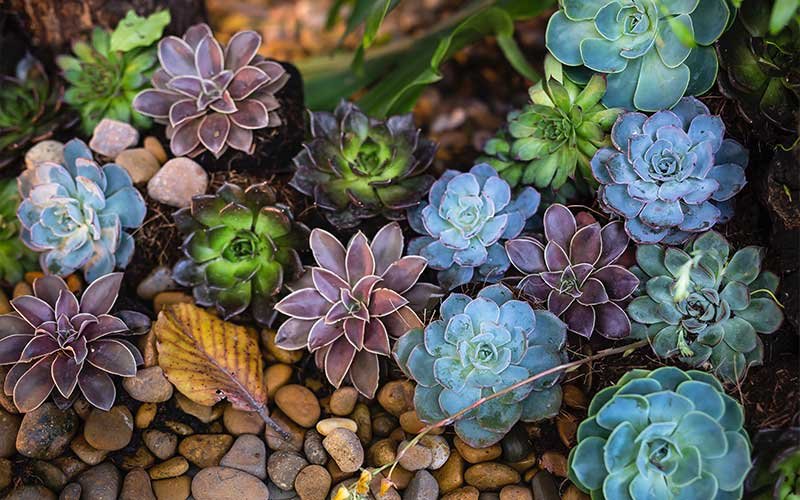
Succulents have always had that minimalist, yet magical way of instantly beautifying your home. Just be simply putting together various types, sizes, and shapes of succulents can already be aesthetic in itself.

However, these succulents are not just for decoration means alone. Succulents, as plants, provide numerous health advantages that you and your loved ones at home can benefit from. Some of these benefits range from helping prevent diseases from purifying the air to aiding in quick recovery.

With these benefits in mind, not to mention the aesthetic this plant brings to your home, it is important that you know how to take good care of it.

If you are worried that you do not have the luxury of time take care of these succulents, don’t be. Among the numerous plants that you can keep at your home, succulents are some of the easiest plants to take care of because they require minimal care. So, if you are an all-around gal or pal, out of your house most of the week, taking care of a succulent will not be a weight on your shoulder.

Just remember these important factors: containers or pots, the watering tool, and of course the soil! Among these factors, choosing the best soil is one of the most crucial and difficult parts.

What kind of soil do I need?

The soil used for succulents is quite different from what is normally used with the average plants being kept at home. Generally, succulents do well when they are planted in soil that does not hold water because they only need minimal water consumption. That is why you will need more than just putting it in regular soil.

Choosing the Best Soil for Your Succulents
This might sound weird, but you need to use poor soil which is filled with organic elements. This will allow your soil to dry out quickly, rather than the soil holding the water. As you know, succulents are already great at retaining their own moisture.

You can either make your own soil or buy ready-packed special soil for your succulents.

Making your own soil

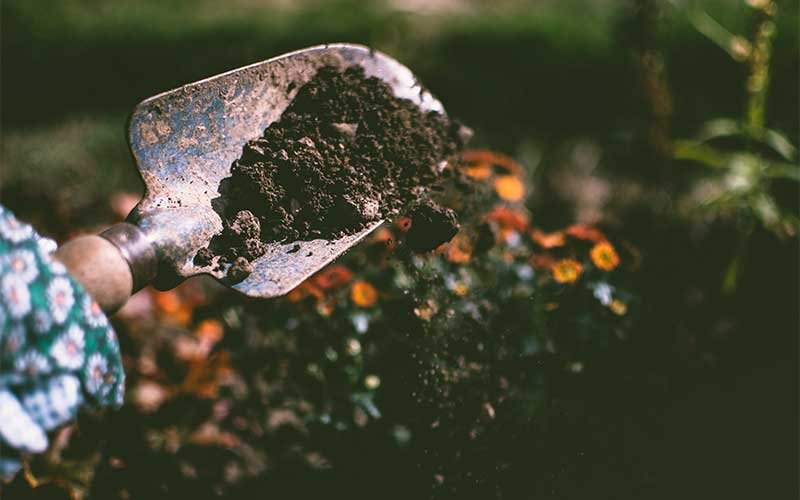
If you are choosing the road less traveled by making your own soil, do not fret because it is actually quite easy. Generally, you just need to mix potting soil and sand to make it more porous (because again, succulents do not like wet roots).

For a more complex yet effective mix for your succulent to thrive in, you will be mixing succulent-friendly soil, equal parts sand, gravel or pumice, and the existing garden soil or potting mix. Be sure to smooth out the surface, but do not pat it down!

Testing the soil

If you already mixed your own soil, congratulations future green thumb! To be sure it is the perfect soil for your succulents, let us test it first.

Spray or pour a bit of water in your soil. If your soil falls apart after you wet it and give it a squeeze, then voila! It has the right components. But, if it remained as a lump after giving it a squeeze, your soil probably needs more inorganic elements such as granite and perlite to make it more porous.

Ready-packed soil

If you do not have time to experiment with your soil and if you are worried that you might not end up creating the perfect one for your succulent friends, there are already great ready-packed soil you can purchase. One high-quality and frequently bought soil is the Gritty Mix Imperial Potting Mix. It contains montery pine bark, granite grit, and turface. This is especially perfect for container plants. You can check out this link to check out their bag sizes and prices! The reviews are also great so you may also check them out.

For soils you plan to buy online, just make sure to read the reviews. Also, since you know what needs to be in a mixed soil for your succulent buddies, double-check the soil’s content and make sure everything is there.

Here is a pro tip: succulents love slightly acidic soil, especially with high lime content. Go give your succulents a treat!

Gravel only, please!

So, you told your friends that you got this set of cute succulent plants that you are going to put in your home. One of your friends might suggest that you just put them directly in gravel. You can actually do that! Again, succulents do not mind the dry. They hate the wet! Gravel can already provide adequate moisture drainage. However, a bit of soil is still necessary to provide nutrients for the roots.

For soils you plan to buy online

Other growing needs

Now that you know the basic essentials for growing your succulents, here are other things you can do to ensure you keep your succulents healthy!

We recommend you try out Cute Farms’ Succulent Fertilizer. It’s a plant food that come as a liquid which you can spray on your succulents for just once a month. That can already make your succulents more alive and healthier. If you already have a succulent at home and you fear that it’s looking odd, just use this product and in just a few weeks, it will go back to how it was when you first bought it. Click this link to check out the prices and whether they ship to your city or not:

Gritty Mix Imperial Potting Mix (Standard Bag)

Gritty Mix Imperial Potting Mix

  • 100% Organic, Soil-less Potting Medium
  • Free Same Day Shipping!
  • Premium Quality, Hand Made Mix from rePotme
  • Fantastic Free Draining Mix
  • Comes in Resealable 8 Quart Bag
Succulent Pots, ZOUTOG White Mini 3.15 inch Ceramic Flower Planter Pot with Bamboo Tray, Pack of 6 - Plants Not Included

Cute Farms Succulent

  • MADE FOR SUCCULENTS, CACTI & ALOE – Plant Fertilizer Gentle Monthly Use Formula. NPK: 0.02-0.02-0.02
  • APPLY TO SOIL – 1-2 pumps near the base of each plant, once a month or just before normal watering
  • EASY PUMP BOTTLE – Measures out a perfect amount of fertilizer
Are Succulents Poisonous?

Are Succulents Poisonous?

Succulents have made their way to the homes of different families and individuals, from being known as just a desert plant.

Did you know that succulents were not ideal for keeping at home as this posed “bad luck” because of its thorns? Well now, gone are the days that people refuse to keep succulents because of that superstition. Right now, we could all say that succulents have their spotlight. It is probably because they are effortless to take care of, and well, they are just super cute and aesthetic.

Some of you might still be in doubt of keeping a succulent at your home. You are not to be blamed for that! The looks of a succulent can give off a “scary” look, with all its thorns sticking out, waiting to prick your fingers any moment. Do not be deceived, because plants are friends. Well, maybe not all plants are friends because some succulents can also be poisonous and hazardous to both humans and animals.

The majority of succulents are not poisonous. However, for the toxic succulents, their poison is their way of protecting themselves. Hence, they have thorns and spikes. That is why you need to make sure that before purchasing any succulent at the mall or online, double-check the hazards.

The Poisonous Succulents

Later in this article, you will realize that poisonous succulents only pose minor threats to humans and animals alike. They do not have fatal possibilities when in contact with them. However, it is still better to be safe from irritants and other possible health issues. So, go ahead and read!

Euphorbias

Euphorbias are the most commonly known family of poisonous succulents. The white sap that can be found in their leaves can cause irritation to the skin. Ingesting the sap is especially bad.

You can still actually choose to keep one at home, but make sure that you put only gloves while handling them. However, if you have pets at home and inquisitive children, keeping this might not be a good idea.

While not all people or animals will have adverse effects when in contact with the Euphorbias, there is still a high probability of getting a rash when touching this succulent.

Kalanchoes

Kalanchoes are the kind of poisonous succulents you can keep at home because they are not dangerous for humans; but, if you have pet animals at home, you may have to think twice.

Many kalanchoes can cause animals like dogs and cats to be ill. If your pet ingests the sap found in the leaves, your pet may show signs of vomiting or diarrhea, and even abnormal heart rhythm.

Besides that, Kalanchoes are tremendous, and you would want to keep them because of their beautiful color.

Jade

The Jade is a lovely succulent and also poses a danger to humans and animals. When their saps are ingested, it can cause minor issues such as diarrhea and vomiting. Touching the plant, such as its leaves and thorns, may also lead to itching and burning for some. This succulent is also best to keep away from your cats and dogs. If your pet animal ingests the jade plant, they may suffer from vomiting as well, and even depression.

If you are explicitly wondering about cacti and their poison, you can watch this video to get a visual of identifying poisonous cacti

Succulent plant safety

Now that you have learned that poisonous succulents only pose minor threats, you may decide on still pursuing to keep them at your home. It is still possible to keep them, but make sure to follow these guidelines in mind.

  • If you plan to keep them indoors, make sure to put them at a higher place where your dogs, cats, or children can’t reach them.
  • If you plan to keep them outside, make sure to keep them far from walkaways so that your guests will not be in contact with them.
  • When handling these poisonous succulents, be sure to wear gloves, long sleeves, pants, and a face mask.
  • Do not touch your eyes, face, or any part of your skin after being in contact with these plants.
  • First, wrap your succulents in a paper towel or newspaper.
  • If you ingest the sap accidentally or get irritated after being in contact with the succulent, call poison control right away to see if you need further medical attention.
Succulent plant safety

Best succulents to keep at home

To be one hundred percent safe from possible health issues, it is best to keep the poison-free succulents. A lot of these succulents can be consumed. Some of these are also used for medicinal purposes. Below is a list of some of the best easy-care succulents you can keep at home.

  • Aeonium
  • Aloe (This is edible and can be used as medicine!)
  • Crassula
  • Echeveria
  • Haworthia
  • Portulaca
  • Sedum
  • Senecio
  • Agave (This is where tequila comes from!)
While these plants may be poison-free, they definitely are not thorn-free. They still have the usual spines and thorns that can still prick your skin, so be extra careful.

Succulents are really easy to take care of. Just the need for watering is very minimal. You only need to water it once a week, and it will take care of itself. With the aesthetic of the succulents, they can add beauty to your homes. It is so fascinating to put a variety of them at your home with its different shapes and sizes, and then to put them on beautiful pots.

Aesthetic of the succulents

You can check out these minimalistic but aesthetic pots from Amazon by clicking on this link. Check their price and be ready to give your succulents their new home.

Succulent Pots, ZOUTOG White Mini 3.15 inch Ceramic Flower Planter Pot with Bamboo Tray, Pack of 6 - Plants Not Included

Succulent Pots

Free Bamboo Tray: Simple design with a removable draining tray made of bamboo is perfect to catch drips for potted plants.
What Are Succulents?

What Are Succulents?

When people see succulents, they easily recognize its appearance but not its name. There are numerous varieties of succulent plants. This is probably the reason why some people do not remember them as succulents. Even in the past, succulents have always been popular due to a lot of reasons. Aside from having a wide range of varieties, they are also very easy to maintain, have unique forms and a few of them have amazing colors.

What Makes Succulents Unique?

Succulent is taken from the Latin word “sucus” which refers to sap or juice. Succulents are quite unusual because they store water in their stems and leaves. This is why they can survive even during dry conditions.

Most succulents have broad stems and leaves because they will serve as water storage. Succulent plants can be found in different parts of the world. There are more than 50 succulent plant families and most of them can be found in semi-deserts. Rain occurs more often in these areas than in real deserts. However, some types of succulents can survive in tropical and wet regions.

When succulents are still starting to grow, they require constant watering. When the dry season comes, they are going to use the water that they have stored in their stems or leaves. Succulents can grow even in poor soil. Hence, this is a great plant for any garden.

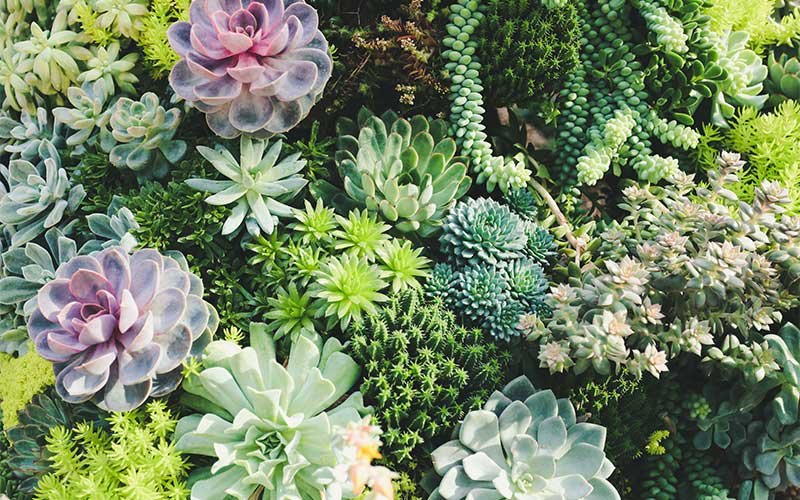
Two of the most stunning varieties of succulents are sedums and sempervivums. They come in different colors and can endure summer and winter conditions. Succulent plants are perfect for your backyard since they are available in a variety of sizes, shapes, and colors.

Is Cactus a Succulent?

Cactus comes from the Greek word “kaktos” which means a spiny plant. One of the most popular succulents is cactus plants. These plants use their stems for storing water. Most people are getting confused with cactus and succulents because most often they are either grouped together or separately.

The cactus family is one of the subcategories of succulents. Also known as Cactaceae, they are considered as one of the biggest families among the succulents that are found all over the world.

Cactus plants are most recognized for their thick stems which are used for storing water. They are spiky and have a few leaves. Due to this unusual appearance, people can quickly distinguish them. Generally, all cactus plants are succulents.

However, succulents are not only made up of cactus plants since there are also other varieties. Some horticulturists argue that cactus plants are not part of the succulent group. Bur for those who love to grow succulents, this minor difference wouldn’t matter.

Is Cactus a Succulent?

Where Can Succulents Be Found?

Succulents exist in different parts of the world. They can grow in a variety of habitats. Most often, they can be found in uninhabited places. Succulents can be found in deserts, semi-deserts, or any dry areas. However, they can also grow in rain forests and mountains. They can survive in harsh areas where other plants can’t. For instance, in areas where there is low rainfall or have high temperatures. This is why succulents are very adaptable.

Succulents in Africa

Several native succulents are found in Africa. Probably due to its ideal climate and environment. Here are some of the common succulents that are found in Africa:

Aloe Juvenna – Also known as Tiger Tooth Aloe due to its thorny edges. It comes in different colors and can branch from the base. Aloe Juvenna does not grow fast, so you don’t have to change pots more often. Avoid overwatering them since it can result in rotting.

Haworthia Attenuata – Also referred to as Variegated Zebra Plant. This type of succulent looks like an aloe plant since they belong to the same subfamily. They can be distinguished by their pointed leaves which have white spots. You have to water them thoroughly while it’s growing.

Haworthia Cymbiformis – This is usually identified by its unique appearance which is a cluster of thick green leaves that look like roses. Cymbiformis means “boat-shaped”, which is exactly the shape of its leaves. This type of succulents is very easy to grow. Just be careful not to overwater them.

Haworthia Cymbiformis

Succulents in Mexico

There are a lot of native succulents that can be found in Mexico. Here are some of the common ones.

Echeveria Pulvinata – Also called Plush Plant or Ruby Blush. They have hairy green leaves with red edges. Its flowers vary in colors. Although they are very easy to grow yet you have to protect them against cold temperatures.

Sedum Morganianum – This is usually referred to in different names such as Burro’s Tail, Donkey’s Tail, or Lamb’s Tail. They are highly distinguished by their numerous lengthy, hanging stems. These succulents can withstand harsh conditions and requires little maintenance.

Graptopetalum Paraguayense – Commonly known as Ghost Plant, these plants have triangular leaves that form into roses. The color of its leaves can change in different varieties depending on the temperature.

Succulents in Asia

Hoya – Best known as Wax Plant or The Hindu Rope. They can be instantly recognized by their dense, heart-shaped leaves which are enduring. Keep in mind that not all hoya plants are succulents. They require lots of light during their growing season.

Euphorbia Paralias – Also known as Sea Splurge, these succulents have yellow-green flowers on top of the stems. Just like the other type of succulents, they are also very easy to maintain.

Sedum Makinoi – These succulents have lengthy round leaves. They do not require a lot of maintenance. You can either grow them in containers or use them as a ground cover in your backyard.

5 Easy Succulents to Grow for Beginners

5 Easy Succulents to Grow for Beginners

If you’re planning to grow your very first succulent, or you’ve been growing succulents but find it a tedious task, then you’ve come to the right place. Caring for succulents can be more challenging than caring for other plants. Some varieties of succulents, such as String of Pearls and Black Prince, can be tricky to handle. So, we’ve rounded up a list of the easiest succulents to care for under any climate. Did your favorite make it to the list? Let’s find out.

Basic Care for Succulents

Like most plants, succulents need some primary care. All succulents included on this list need the following to thrive:

  • Fast-draining soil
  • Proper watering
  • Sufficient light
  • Favorable climate conditions

Crassula Ovata

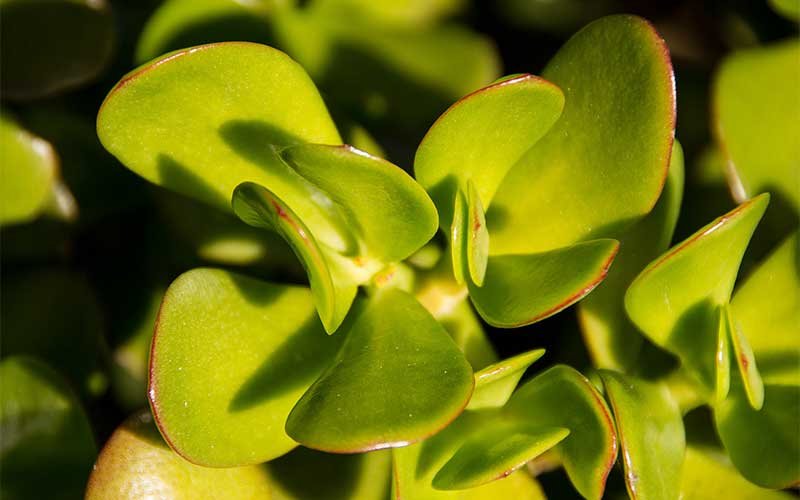
Crassula Ovata, popularly known as the Jade Plant, is a favorite succulent variety around the world. It has dark green leaves that are oval. The leaves grow on partly woody stems. This succulent variety can grow both indoors and outdoors.

5 Easy Succulents to Grow for Beginners
Under sufficient light, the leaf margins of this succulent turn red. In spring, when it blooms, Crassula Ovata yields a cluster of bright, star-shaped flowers that attract pollinators. When planted on the ground or large pots and under favorable climate, this succulent can grow into a well-branched shrub that is around 5 feet tall. In colder climates, it is best to place your jade indoors until spring season comes.

Be sure to protect your Crassula Ovata from the frost, and only water when the soil is dry. You can propagate Crassula Ovata easily through stem cuttings and individual leaves.

Aloe Vera

Because of its many medicinal uses, Aloe Vera is well-loved by many. Some say that Cleopatra uses it as a part of her beauty regimen. Aside from its beautifying properties, the gel inside the leaves of the Aloe Vera can also treat burns, rashes, and stomach pains. Similar to the jade plant, Aloe Vera can thrive whether in full sun or shade.

Protect them from the frost by placing them indoors during winter. When grown from the ground, Aloe Vera can reach up to 3 feet tall. You can propagate your Aloe Vera by separating the offsets from the mother plant. In Summer, when Aloe Vera usually blooms, it forms tall and colorful flowers that attract birds.

Aeonium Kiwi

Aeonium Kiwi has flower-like foliage that makes it appealing to beginners. It has woody stems that branch and curve into a beautiful rosette. It can also grow in full or sun or shade, but when the temperature hits 80° F, provide them shade.

In ample light, the leaves flush yellow and pink colors, which makes it even more appealing. You can propagate Aeonium Kiwi by stem cuttings. Take them indoors when the climate gets too cold. During summer, they can go dormant, so cut back on watering them until you see new growth.

Sempervivum

Crassula Ovata
It’s easy to grow and love Sempervivum. It has short stems that connect it clusters of rosettes, which makes it popularly known as hens and chicks. Sempervivum can grow outdoors year-round, thriving even at -15° F. They can also grow in full sun, in rocky soil. Although the name Sempervivum means “always living,” it is a monocarpic variety, which means it flowers, sets seeds, and dies. However, it produces many offsets, so it easy to keep its colony thriving.

Haworthia fasciata

Often called the zebra plant because of its dark green leaves that have bright white tubercles, the Haworthia fasciata makes for an edgy addition to your succulent collection. It has a spiky shape that gives it an edgy look. Haworthia fasciata is best grown indoors under a bright light or outdoors in partial shade. Make sure to protect it from the winter climate. It grows slowly, but you can propagate it once you see it offsets.

These succulents are your best choice, whether you’re growing your first succulent or gifting one to a friend. If you have an easy succulent in mind, please comment on it below! We’d love to add more to this growing list!

The Secret to Having Colorful Succulents

The Secret to Having Colorful Succulents

Did you ever have a succulent so beautiful and colorful that suddenly turned green? Are you wondering why your succulents change in color within a short time? The reason is stress. Exposure to excessive sunlight, deficiency in water, and changes in temperature cause stress to succulents. When a succulent is stressed, it flashes out brilliant colors.

Succulent Stress

Just like us people, plants also experience stress in many forms. Distress can be damaging, while eustress, or good stress, can make us feel and be better. We allow our kids to be exposed to germs so they can develop a better immune system. We do this even if we are also aware that it can initially cause them distress when their immune system encounters microbes. For plants, stress is any aberration from their ideal growing condition, which causes them to react physically.

What Causes Succulent Stress?

Pigments

Several changes in the environment cause stress to succulents. The most common are changes in sun exposure, a shift in temperature due to the changing of seasons, and variations in the water level of the soil.

Sometimes, plants grow very tall in low light, which is their response to damaging stress. If the plant gets enough sunlight, it grows more steadily. However, excessive sunlight can cause the plant to develop a more brilliant color. This occurs because of anthocyanin and carotenoid, which are pigments found in plant tissue. These pigments protect the plant from environmental stresses.

Sun exposure

Anthocyanin is usually blue, violet, or red. Carotenoid, on the other hand, is typically yellow, orange, and red. When a plant becomes aware of stress in its environment, like getting more sunlight than needed, it protects itself by producing more anthocyanin and carotenoid.

These anti-oxidant pigments work like melanin in people and protect plants against damage from UV rays. People get tan when staying under the sun for too long because of an increase in melanin production, and the same happens to plants. The more pigments a plant produces, the brighter its color. In the same way, the more stressed succulents become, the more we see their colorful kind.

Sun exposure

Seasons and Temperature

Succulents also increase their production of anthocyanin to protect themselves from dropping temperatures. With the change of seasons, plants experience a difference in temperature. This can cause the succulent to change in color and even in shape. During spring, when sunshine and heat are abundant, succulents are brighter in color, and their leaves are a bit more closed. In the fall and winter seasons when the temperature is cooler and the sunlight is softer, succulents open up wide, taking in as much sunlight as they need to make the most of photosynthesis. Because the threat of UV rays also decreases in fall and winter, the production of anthocyanin also decreases, resulting in a drastic change in color.

Water Level

The third common cause of change in succulent color is water stress. Succulents are known to grow extraordinarily well where the water is scarce. Their environment is typically dry for long periods with short gushes of rain. The cycle of drought and drench is their natural ecosystem and doesn’t cause stress to succulents. However, if the dry period is extensive and they receive a limited drench period, the succulents become stressed, and they produce more anthocyanin.

Good Stress

Being aware of what stresses succulents can help you take care of them better. However, do not try to spare them from any form of stress. Just like with people, a change that leads to stress is a part of the succulents’ natural world.

Unnecessarily protecting them from these natural occurrences can prevent them from thriving. Provided that the stress does not compromise your succulent’s health, allow your plants to experience and respond to stress.

Now enjoy your colorful succulents. If you have more information about succulent stress that you want to share with us, please let us know in the comment box!