skip to content
Eden Succulents
Choosing the Best Pots for Your Succulents

Choosing the Best Pots for Your Succulents

Why should you choose the perfect pot for your succulents? Most succulent enthusiasts would not mind what kind of pot they would use for their succulents. However, do you know that these pots can greatly influence the health of your succulents aside from making them look good? There are various types of succulent pots and they greatly vary in sizes, drainage, as well as the materials being used.

What Are the Materials Used for Succulent Pots?

Ceramic Pots

Ceramic pots are created from clay and solidified by heat. There are two types of ceramic pots, the glazed ceramic pots, and the unglazed ceramic pots. Glazed ceramic pots are not as porous so it does not dry out fast and has restriction in the air movement.

It has a smooth surface since it has a glazed coating. It is not breathable however it does not mean that it is not good for your succulents. You can use them for your succulents, but you have to be careful in watering them. Make sure that the soil is completely dry before watering your succulents.
On the other hand, unglazed ceramic pots are porous, but they are not as breathable as terracotta pots. There is movement of air and water on the sides. It is great at retaining moisture, so you don’t have to water your succulents more often.

Ceramic pots are ideal for succulents that favor dry soils. They come in various colors and designs, making them great for outdoors and indoors. Keep in mind that they are fragile, so you must be careful in handling them. Ceramic pots tend to be heavier and more expensive too! Also, they can’t stand too much coldness.

Ceramic Pots

Terracotta Pots

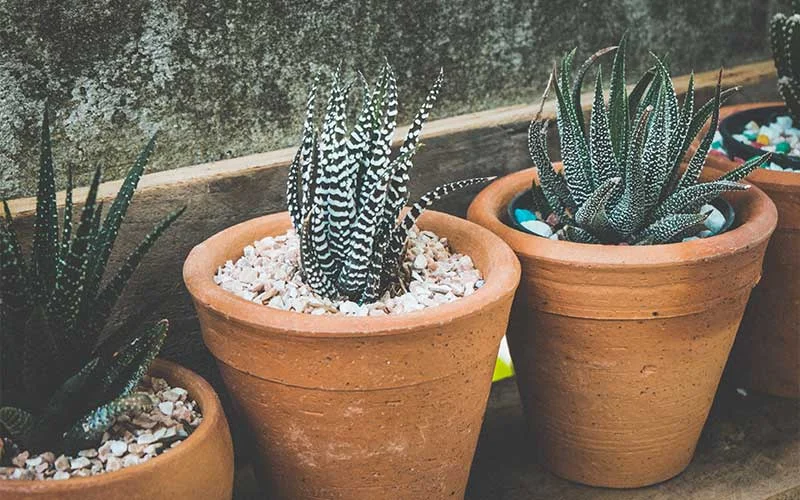
One of the most popular choices of succulent growers is terracotta pots. It is made of porous material, making it more breathable. Breathability is something that your succulents need, however, this might not be ideal if you are living in dry places or during hot summer days.

If you are using terracotta pots for your succulents, then you must water them more often. When these pots are exposed to the sun for a long period, it can get too hot and might destroy the roots of the succulents. Terracotta pots are perfect if you are living in a place with a humid and hot climate.

One of the greatest advantages of terracotta pots is they are extremely heavy to lift, especially when they are already filled. Also, you must be very careful when using them because they can easily get damaged.

Plastic Pots

The most common types of succulent pots are plastic pots. Most often, we can see succulents in plastic pots being sold in garden centers. This is not a bad choice after all. Plastic pots are light, so they are easier to move. However, they are not breathable, this means that it can hold more moisture. Also, it is easier to determine if it requires more water. Simply hold the pot in your hand. If it is still heavy, then it still has a lot of water. But if it is already light, then you need to water them.

Furthermore, polyresin pots are much the same as plastic pots. You can’t even tell the difference if you don’t touch it. Polyresin pots are also available in different sizes and designs.

Concrete Planters

When it comes to concrete planters, you can choose the particular size and shape that you want since it will depend on its mold. You can even customize it by painting or decorating them. However, always ensure that it has a drainage hole.

Concrete Planters

Glass Containers

Keep in mind that glass containers do not have any drainage holes. They are ideal for terrariums. But they can also be used as plant holders. They can look terrific if you put some colorful sand on it since they are transparent. Glass containers are best for drought-tolerant plants such as succulents. Be careful not to overwater your plants since it does not have drainage holes.

Wooden Planters

Succulents can also be planted on wooden planters. If you want to use wooden planters, then be sure that your plant and your pot have some protection. You could place a plastic container at the bottom so the wood can be protected against too much moisture. If you don’t have protection, then it might get rotten and the roots of your plants could get damaged.

Things to Consider When Choosing Your Succulent Pots

Drainage Holes

If you don’t want to buy succulent pots for your succulents, then you can use any types of containers, just make sure that it has some drainage holes. If you can’t put drainage holes in them, then just try to avoid overwatering your succulents.

Drilling a hole in your container is not difficult at all. Just secure a drill and a drill bit. For smaller pots, you can use ½ inch drill bit and for bigger pots, use a one-inch drill bit. For bigger pots, you can drill more than one drainage hole. Drilling a hole on your pots can be done in less than a minute.

Size of Pots

Aside from the pot materials, the size of your pots is also important. Some people think that a bigger pot is a good option since it provides more space for the roots to grow. Unfortunately, this is not true. When planting your succulents, you only need to keep it shallow. If you use a pot that is not breathable and is too deep, then there are chances that it will get rot.

The best solution is to use succulent soil with good drainage. When making your succulent soil, be sure to put additional coarse sand and perlite. You could also improve its drainage by laying your pot on top of the gravel. Once your succulents have grown bigger, you can transfer them to another pot.

Another solution would be to choose succulents that can withstand deeper and non-breathable pots. One good example would be Haworthia. These succulents can tolerate extreme moisture.

Eden Succulents has been helping succulent enthusiasts in growing and caring for their succulents. We want to make sure that you can grow healthy succulents. If you have any questions about succulent pots, then please let us know in the comments below.
What Succulent Plants Are Edible?

What Succulent Plants Are Edible?

Most people love to grow succulents indoors or outdoors because they look incredible. Succulents are very popular because they are very easy to grow and require little maintenance. But do you know that some succulents can be eaten?

There are different ways of eating them, either raw, mashed, grilled, or juiced. You could even sauté them or use them as one of the ingredients in your salad. Succulents are tasty and can be a great addition to your dinner plate. Here are some succulents that can be eaten and can also be used as an adornment.

Dragon Fruit (Hylocereus undatus)

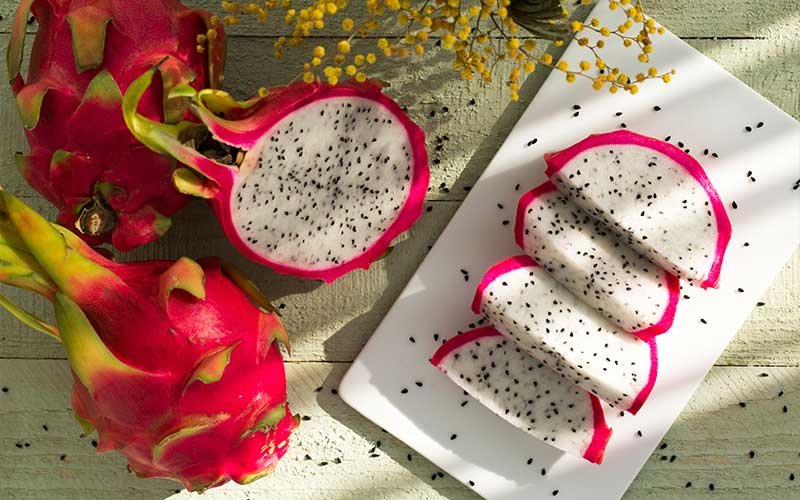
Also known as strawberry pear, this vibrant fruit comes from Hylocereus cactus. This type of succulent is originally from Central America. It commonly grows in hilly areas and climbs on rocks. The dragon fruit has a thick reddish skin while the edible part is white with tiny black seeds. However, some dragon fruits have yellow skin while others have a pink/red pulp. Its pulp tastes a bit sweet and can be eaten raw or can be processed into smoothies.

Aloe Vera (Aloe barbadensis)

Aloe Vera is commonly used in cosmetics and medicines. The gel from the leaves can be used as a remedy for dry skin and eczema. It can also be used for treating wounds and burns. There are different varieties of Aloe, however, Aloe Barbadensis is the safest to use. The edible part of the leaves can be eaten raw or cooked. The outer skin is a bit stiff and must be removed. The inner part can also be a great addition to salads. You must rinse it in water to eliminate the latex.

Prickly Pear (Opuntia)

Also referred to as nopales, this edible succulent is commonly found in Mexican restaurants. They are chewy and tastes like green beans. However, its fruit has a similar taste of bubblegum and watermelon. The fruit of Opuntia is known as prickly pear stateside, but in Mexico, it is known as tuna. The leaves of Opuntia can either be boiled or grilled. It can also be used as an ingredient in soups, salads, tacos, and salsas. While its fruit can be eaten as raw or juiced.

Prickly Pear

Stone Crops (Sedum)

Sedum is a type of succulent that you can find almost everywhere. They are commonly used as ground-cover plants since they can spread nicely. Sedum has a lot of species and almost all of them can be eaten raw. They have a peppery taste while others are bitter. It is best to stir fry them or turn them into salads along with other ingredients.

Saguaro Cactus (Carnegiea gigantea)

Saguaro is commonly found in Western America. We usually see this type of succulent in Western movies. However, it is more than just a desert ornament. Its lovely white flower, which only blooms at night, is the state flower of Arizona. Keep in mind that it can only bear fruit once it is matured enough. It has a greenish-pink fruit while its pulp is bright red and has a sweet taste. The fruit also contains small black seeds which have a nutty flavor. Aside from the fruit, the cactus itself can also be eaten.

Sea Beans (Salicornia)

This type of succulent plant commonly grows in beaches. They are becoming more and more popular now, especially among gourmet chefs. You can also see them in grocery stores. These sea beans can be eaten as raw or cooked. Its taste and texture are quite the same as asparagus. To remove its salty flavor, you have to blanch them.

Organ Pipe Cactus (Stenocereus thurberi)

This succulent looks like Saguaro, however, it is a bit smaller. It has arms at the base of the plant. Organ Pipe Cactus bears a small red fruit named as Pitahaya Dulce. If you want to see an Organ Pipe Cactus, then you should visit the Organ Pipe Cactus National Monument in Arizona. There are plenty of organ pipe cacti that are grown there.

Organ Pipe Cactus

Barrel Cactus (Ferocactus)

This succulent is a native of Southwestern America. It has large spines making it look hazardous. But unbelievably it is edible! It has vibrant red flowers that can generate yellow fruits that look like tiny pineapples. The pulp of the fruit contains black seeds. It tastes like kiwi and lemon. Aside from the fruit, the flowers and the plant itself can also be eaten. Although they do not taste good, these can be very helpful if you feel hungry in the desert.

Purslane (Portulaca oleracea)

This succulent can spread tremendously. That is why most people think that this is a weed. However, Purslane is rich in vitamins and minerals. It also contains omega-3 fatty acids. Its leaves and stem are so tender that it can be eaten raw. It tastes a bit salty and sour, making it a perfect addition to your salads.

Although Purslane is best when eaten raw since it contains high amounts of oxalic acid. The yellow flower buds of this succulent also taste great and can be added to your salads. When cooked, it can taste like spinach. When cooking Purslane, its sourness can be slightly removed but its oxalic acid can also be lessened. Its seeds can also be eaten.

Banana Yucca (Yucca batata)

There are different varieties of yucca species, however, not all of them are edible. Traditionally, Yucca batata, Yucca elata, and Yucca madrensis are just some of the species that can be eaten. Keep in mind that they are not associated with the root crop Cassava which is also known as yucca. The fruit of Banana yucca has a resemblance of banana fruit, that is why it is called as such. Its fruit will emerge on the middle stalk which is also where the flowers can develop. You can either eat the fruit raw or roasted. Aside from the fruit, its white flowers and thick stalk can also be eaten.

At Eden Succulents, you can find a lot of information about succulents. We want you to have fun while growing your succulents. Do you know other types of succulents that can be eaten? If so, then please share it with us!

A Guide to Making the Perfect Succulent Soil Mix

A Guide to Making the Perfect Succulent Soil Mix

The perfect succulent soil mix is the best soil for your succulents. Best of all, it is very easy to make. Here, you will find out how to make your succulent soil, so you won’t buy it from the store anymore. The fact is, it is even much cheaper to mix your succulent soil than purchase the ones that are sold in nurseries and home improvement centers.

Also, there are chances that the commercial soil mix that you bought for your succulents contains less sand. This means that it can hold more water, which is not ideal.

Why Should You Choose the Best Soil for Your Succulents?

When you are planting your succulents in containers, it is essential to choose the proper succulent potting soil mix. One of the major problems of growing succulents is overwatering. Sometimes this can lead to the death of your succulent. Because of this, you must use the best type of soil for your succulents. The best succulent soil has a mixture of porous soil so it can drain well, and overwatering can easily be prevented.

Why Is It Important to Make Your Succulent Soil Mix?

Making your own succulent soil mix has plenty of benefits. First of all, it is much cheaper and at the same time, you can choose the ingredients that you want to include. You can even save more by making potting soil mix in bulk. By having total control of the ingredients, you can choose to alter your succulent soil mix recipe to make it perfect for your succulents.

How to Make Your DIY Succulent Soil Mix

Sometimes those commercial succulent soil mixes that are sold out there are not coarse enough. Here, we will teach you how to make your succulent soil mix that is just right for your succulents. They are cheaper and super easy to make. Most of all, they are the best for your succulents.
The ingredients that are needed are readily available online or in your local garden stores. Additionally, these ingredients are reusable. You can use them in creating other types of DIY potting soil.

How to Make Your DIY Succulent Soil Mix

What Are Needed in Making DIY Succulent Potting Soil?

Making your succulent soil only requires three ingredients. Most importantly, they can be easily found in home improvement stores and garden centers. The ingredients for your succulent soil mix are potting soil, coarse sand and perlite or pumice.

Potting Soil

You can use any kind of potting soil that is intended for indoor plants. It will be used as the base for your succulent soil so make sure that it is fresh and sterile. There are different brands that you can choose from. It is highly likely that you will choose the one that is readily available in stores. As much as possible, look for light, porous soil. Avoid using heavy garden soils and don’t choose the ones which contain vermiculite, or other kinds of moisture control. You need to remember that succulents require a potting soil mix that can drain well and not a soil that can keep moisture.

Coarse Sand

It is best to grow succulents in a porous sandy potting soil. Hence, you must mix your potting soil with sand. Essentially, you can use any kind of soil, however, you need to make sure that it can drain well. Choosing coarse sand is a good choice than using fine sand.

Avoid using sand that comes from the beach, garden, or a sandbox. If sand is not available or you don’t want to use sand, then you can always use turface or poultry grit as an alternative.

Perlite or Pumice

Perlite is a modified organic soil. It is very light and looks just like small pieces of Styrofoam. Perlite provides better drainage and holds little moisture which is perfect for your succulents. Just like potting soil, perlite or pumice can be bought in home improvement stores or garden centers. If you can’t find it in these stores, then you can purchase them online.

Aside from these three ingredients, you also need some supplies for mixing and measuring your ingredients. You will be needing a trowel, a measuring container, and a mixing container for the ingredients.

Perlite or Pumice

Recipe for DIY Succulent Soil

The ideal recipe for a succulent potting soil is three parts of potting soil, one part of perlite or pumice, and two parts of coarse sand. This is just the basic recipe however you can alter it if you want. If you want to make a cactus potting soil mix, then just add one half or one part of sand and perlite for additional drainage.

When we say “part”, it usually refers to the type of measurement that you use. For instance, if you are using a cup, then one part would mean one cup, two parts mean two cups, and three parts would refer to three cups.

How to Mix Your Succulent Potting Soil

It is very easy to mix your succulent potting soil all you have to do is put all the ingredients in your mixing container and stir them. You could also use your hands or a trowel in mixing all the ingredients, just make sure that they are mixed evenly.

How to Store Your Leftover Succulent Soil Mix

One of the best things about DIY succulent potting soil is you can store them for later use. You can easily store them on the shelf of your garage or basement. If you don’t want to make a big batch of the mixture, then you can just mix a batch that is just enough for your needs. Be sure to use an air-tight container when storing your succulent potting soil.

Eden Succulents can provide you more information on how to care and grow your succulents. We can guide you in watering, propagating, fertilizing, and lighting your succulents. We can also give you some suggestions on the best succulents to grow indoors or outdoors. If there is something that you want to know about succulents, then let us know about it in the comments below!

Growing Succulents on A Budget

Growing Succulents on A Budget

For some reason, a lot of people believe that it is expensive to keep houseplants such as succulents in your home. What they do not know is that it will only be costly if you choose to be expensive. Research goes a long way. The research will tell you that there are a lot of ways to keep your love for succulents without having to empty your pockets.

We have decided to compile all the budget-friendly ways of collecting and growing succulents. We are so excited to share these with you in this article. Hopefully, this will spark that love for succulents that you have in you. Through this, we also hope that you will no longer worry about the expenditures.

Succulents and Succulent Seeds

1. Buying in the Market

Most people choose to buy in the market or in the mall because, of course, we want to see how beautiful and healthy the succulents are with our own eyes. A simple potted succulent plant may cost around $3 – $4, depending on its cut, shape, and size. Most succulents are cut in a flower shape, which is very beautiful.

If you are planning to buy only one or two succulents, it is not expensive. However, if you are planning to collect sets of succulents of different families, that is where we need to be critical of how much we spend.

If you are buying in the market or in a physical store, here is our pro tip! However, take note, if you use this pro tip, this will challenge the succulent-grower in you.

Here it goes: Look for sad-looking succulents and ask for a big discount.

Yup that is our tip! Just make sure that these succulents are rescuable. If you are up to that challenge, take it. We will be with your journey every step of the way by providing the articles you need to save that sad-looking succulent and make it happy in your home.

2. Buying Online

Buying Online
The Internet is a vast world, and you will be surprised by the dozens of online shops you can purchase succulents from. The benefit of buying online is that you have a more extensive array of specimen choices. That is why we will share with you here the best online shops to buy from that give you quality and healthy succulents being sold at a very affordable price.

SimplySucculents.com
This is an online platform dedicated to selling succulents. They offer both retail and wholesale prices. You can gather your friends, and you can buy a lot of succulents at their wholesale prices so that you can save money while sharing with your friends your love for succulents.

The best part? They ship worldwide! You do not have to worry about where you are; they will send it straight to your doorstep.

SucculentGardens.com
What is unique about this online succulent shop is that they offer reseller packages! If you are going to buy succulents, why not sell them as well so you can also earn? At the same time, you will be able to share your love of succulent with your neighbors and friends in the city. Win-win, right?

The Soil

While there are affordable succulent potting soils you can buy online, the best way to save around the soil that you use for your succulents is to make it yourself. It is easy, and you get to control the ingredients that you put in your succulent’s potting soil.

Here is a video by Christine Kobzeff on a Do-It-Your-Own Succulent and Cactus Potting Soil.

Some say that your succulents flourish more if you make the soil yourselves for them. Christine Kobzeff can attest to that! Watch the video and see how she does it. Then, why not try it yourself?

However, if you do not have the time to make your own potting soil for your succulents, there are still online shops that sell succulent soils at a very affordable price.

For starters, check out this succulent soil from Amazon:

Succulent Supplies

Succulent Supplies

Amazon can take care of that! They usually have a lot of sales going on with their succulent supplies, so be sure to type in “Succulent Supplies” in Amazon, and boom. You have a set of succulent supplies with too-good-to-be-true marked down prices from ceramics to soils to water bottles.

Check this out, for example. It is a garden set of 15 succulent plant tools. Everything you need is there, and the set is only for $9.50. Online shops offer lower prices than in physical shops. So do not miss this chance!

Be sure also to check Wish.com. It is not an online shop exclusive to succulents and succulent supplies, but they offer great deals. Do not forget to click on “Blitz buy” on their website to see fantastic discounted items every day.

Do you have budge tips of your own? Share it with the rest of the Eden Succulents family!

Seven Uses of Aloe Vera

Seven Uses of Aloe Vera

The Aloe Vera succulent is one of the most famous and common succulents to keep at home. It brings with it a lot of benefits and that is probably why a lot of people are drawn to keeping this particular succulent.

The benefits are not hearsay benefits. Rather, the benefits have scientific evidence to support them. Aloe Vera has been a subject for numerous scientific studies for the last decade. In fact, the gel found in the Aloe Vera is being cultivated worldwide for its claimed therapeutic properties.

On a more historical note, in Ancient Egypt, the Aloe Vera was called, “the plant of immortality.” That is because it has been used for centuries in places like Egypt, Mexico, China, India, Greece, and Japan for therapeutic purposes.

Now in the modern world, the Aloe Vera is still famous. We often see tubs of Aloe Vera gel being sold in commercial shops, usually as a soothing gel for the skin or a relief for sunburn. However, it actually has other benefits and since you have your own Aloe Vera at home, you no longer have to buy commercialized Aloe Vera.

For the Skin

Bill C. Coats, R.Ph., C.C.N., wrote in his book, “The Silent Healer,” that Aloe Vera can treat, exfoliate, restore, reveal and provide constant, impressive nutrition to the human skin. The Aloe Vera has anti-aging and nourishing qualities because it is rich in Vitamin C, E, and beta carotene.

No wonder Aloe Vera is a widely known soothing and cooling gel. Just try it for yourself. Get a finger-load of it and gently spread it on any part of your skin, and you will feel instant relief and coolness.

● Dry Skin

Dry Skin
For dry skin, it is best to mix Aloe Vera, a pinch of turmeric, a teaspoon of honey, a teaspoon of milk, then add a few drops of rose water. Mix this well until this turns into a paste substance. Apply it on your dry skin for 30 minutes to get rid of your dry skin. Voilà!

● Acne
Acne is a severe skin problem, and Aloe Vera can be of help to that. Take your harvested Aloe Vera, add flour-like walnuts, then honey. This substance will give you smooth and clear skin over time. No need for expensive ointments!

● Sensitive Skin
We can’t deny it. Some people have sensitive skin. That has become a problem because these people with sensitive skin have to be critical of the products they use.

No need to worry with Aloe Vera because it is definitely something you can use for your sensitive skin. You may add Aloe Vera with cucumber juice, yogurt, and rose oil until they turn into a paste. Then, leave the paste on your skin for 20 minutes before rinsing it off.

Thus, if you have Aloe Vera at home, treat them well so they can treat your skin well too!

Reduce Hair Fall

Change the soil if you know it is not suited for your succulent. Remember that you can’t just use the regular potting soil. Your soil should be as special as your succulent. For your soil to be right for your succulent, you need a special mix.

Your potting soil needs to be mixed with inorganic elements, such as granite, because we want your soil to be as porous as possible. Our dear succulents do not like too much moisture. Thus, a porous soil will help drain the water easily.

How To Revive A Sad-Looking Succulent

Constipation

In Germany, the use of Aloe latex has now been approved to serve as a treatment for constipation for dosages of 50-200 milligrams. However, the Food and Drug Administration in the United States ruled that there is not enough data that would support the Aloe as an effective treatment for constipation.

Alternative to Mouthwash

Researchers found that Aloe Vera extract can actually be a safe and good alternative to mouthwash. The Aloe Vera extract contains a healthy dose of vitamin C, which can block plaque. The other ingredients it contains can also provide relief if you have bleeding or swollen gums. Aloe Vera saves the day!

Lowering Your Blood Sugar

According to a study in Phytomedicine: International Journal of Phytotherapy and Phytopharmacy, it shows that if you ingest even just two tablespoons of Aloe Vera per day, this can cause your blood sugar to fall in people with type 2 diabetes.

Keeping Produce Fresh

Studies have shown that coating produce with Aloe Vera gel can block the growth of many types of harmful bacteria, such as Salmonella and Escherichia coli, both in fruits and vegetables.

So, if you went home after a day of grocery shopping, be sure to coat your fruits and vegetables with your Aloe Vera extract to extend their shelf life. You will no longer have to worry about getting diseases such as meningitis from the bacteria from rotten produce.

Weight Loss

Weight Loss
Try using the Aloe Vera as a juice and incorporate these into your daily diet. Studies show that Aloe Vera can maximize your weight loss potential and the effectiveness of your diet. Not only that, but consuming Aloe Vera can also improve your overall health condition. No wonder Aloe Vera is being used all over the world in various forms, such as cream, gel, or juice.

Harvesting My Aloe Vera Plant

The source of all these benefits is the gel of Aloe Vera, which can be found in their leaves. It is easy to harvest the gel of your Aloe Vera. Just follow these simple steps:

  • Pick Out A Juicy Leaf
  • With Clippers, Slice Your Leaf Across
  • Split the Leaf in Half
  • Extract the Gel

For visuals, go ahead and watch this video and check how Debra Lee Baldwin harvests her Aloe Vera gel here.

If you do not have an Aloe Vera plant at your home, we are guessing that you are probably on the way to the farmer’s market to get one. Who would not? The benefits are incredible, and they go beyond beauty benefits but reach medicinal benefits as well. Do you have any additional benefits of Aloe Vera you’d like to share? Leave us a comment below, and feel free to take a look at the rest of the succulent-rich information hub on our website!