skip to content
Eden Succulents
The 8 Benefits of Keeping Succulents in Your Home

The 8 Benefits of Keeping Succulents in Your Home

Your home is called home not because it is a house that provides a roof over your head. It is called home because it is your personal safe haven, your sanctuary. You should have a home that you feel comfortable, where you will be excited to go home to, where you can sleep and wake up the next day with a smile on your face.

There are various factors involved in making your home truly a home like the theme of your decorations, the comfortability of your bed, and the relationships you have with the people you live with. If everything seems to be in place, that is great to hear!

But wait, just to be sure. We will just ask you this question: Do you have succulents in your home? Yes? Perfect! No? Well, maybe that is a missing piece of your home.

For people who have green thumbs, they will most likely put a lot of plants inside and outside their homes. Plants are of their priority. However, for a lot of other people, plants can’t exactly be found on the top of their must-haves when decorating their homes.

Here is our reminder for you, homemaker. Go get a plant! If it is your first time to get a plant and take care of one, succulents are the perfect house plants for beginners. It is one of the perfect plants to keep and they have eight blooming benefits if you put them in your home.

1. They Add Color to Your Home

They Add Color to Your Home
One of the unique traits of the succulents is its color. As you may know, succulents come in different sizes and shapes. But did you know that they come in different colors too? Red, pink, or green, take your pick! Whatever color you choose, the succulents will definitely bring some personality into your home. They might make the perfect match with the bamboo mats on your dining table. What do you think?

2. They Purify the Air

According to a NASA research, succulents are able to excellently cleanse the air in your homes and remove toxins. You may not smell or see it, but there are toxins in the air in your home that come from the organic chemicals found in rugs, books, grocery bags, and more.

Thus, keeping succulents make the air in your home cleaner to breathe. Wouldn’t it be nice knowing that you are coming home to a place with purified air?If you have a room with books and rugs, this may be a perfect place to put more than just one succulent.

3. They Help You Breathe

This benefit may be a very obvious one since we know that plants give off oxygen which we, as human beings, breathe. For some people, they have a hard time to sleep. Maybe what you need is a succulent by your bedside table to boost an extra amount of oxygen to give you that good night’s sleep. Try having an aloe succulent by your night lamp as this is one of the succulents known for its medicinal advantages and purposes.

4. They Help You Focusl

They Help You Focus
It has been found in a number of studied that productivity, focus, and concentration heighten when plants are in the room you are working in. These studies show that the brain’s capabilities improve by as much as 20 percent.

Succulents are more suited for this role than other houseplants because they are more convenient to put on your desk. Not only that, they are easier to care for. Sometimes, people do not like to put plants in their desks because they worry about having to put so much energy in taking care of these plants.

That is why succulents make perfect work buddies because you do not have to give them your full attention all the time. They just need a bit of your time and energy, and they will return the favor by helping you focus on working or studying.

5. They Aid In Quick Recovery

It has been known that succulents can aid in reducing flu-like symptoms, fever, coughs, and headaches. That is why there are clinics and hospitals that put a lot of plants in the corners of the halls or in the wards. There were not just put there to fill empty spaces, but they also serve a purpose to patients.

If you have succulents in your home, you will not have to put extra artificial humidifiers that say to help with sickness. You already have on that is straight from nature. How cool is that? Doctor Succulent to the rescue!

6. They Prevent Diseases

Not only do they aid in recovery, but they also prevent diseases. Did you know that 10% of the moisture in the atmosphere comes from plants? Moisture or humidity is important because it can prevent dry skin, colds, sore throat, and dry cough. Therefore, your home will be more humid if you have more succulents.

And you thought your succulents were only for decoration, right? They are much more than that and we are not even done yet!

7. They Boost Your Mood

They Boost Your Mood
According to research found in the US National Library of Medicine National Institutes of Health, interaction with indoor plants such as succulents may reduce psychological and physiological stress. With no stress comes a boosted mood!

It is important to have a home where you can call stress-free. Your home should be the number 1 place where you can be relieved of stress. So just put in the succulents and say goodbye to stress.

8. Growing Them Is Rewarding

Keeping succulents at home also means that you are going to have to take care of them. This gives you a sense of responsibility over your succulents. If you take good care of them, they will reward you with an array of beautiful colors, shapes, and sizes. You will be able to appreciate them more because you were the reason for their beautiful bloom.

Hopefully, you have just been convinced to buy succulents for your home. You will have no regrets. You may buy your succulent seedling or you can even grow them yourselves by propagating seeds. Whatever you choose, Eden Succulents will be here to answer all your questions. Have one now? Search it up in our website and we will guide you every step of the way.
The Top Six Must-Haves for Succulent Growers

The Top Six Must-Haves for Succulent Growers

When it is your first time to grow your succulents, it can be pretty overwhelming. Even if a succulent is indeed one of the easiest house plants to grow, sometimes you tend to go overboard with the things you buy. It really is exciting to take care of succulents.

The beauty of the minimal care that succulents need is that the expenses are minimal as well. Usually, when you go online, you see all these things that you can buy for your succulents. Remember that taking care of a house plant such as the succulent is not a one-week thing. It is a lifetime commitment for as long as your succulent is alive and well.

Now that you are just about to start, we will be sharing with you the six things that you need to have to grow your succulents. It is always good to start with the basics.

1. Succulent Seedling or Seeds

Obviously, the succulent seedling or the succulent seed is something you can’t miss. Most succulent grower newbies opt to buy a succulent seedling like the ones you see in the market, already a bit grown.

However, you can always choose to care for a succulent right from its origin as a seed. If you have selected to buy the succulent seedling, be sure to only get three or four succulents so that you do not have to worry about taking care of a lot of succulents. One step at a time there, future green thumb!

If you choose to buy seeds, there are a lot of markets and malls which sell succulent seeds. You may also purchase online! You can find dozens of sites on the Internet that sell succulent seeds. https://thesucculentsource.com/ is an excellent place to start checking prices for succulent seeds.

With the numerous varieties of succulents, it may be hard to pick only one. Try to go for the easiest succulents to take care of such as the Echeveria, Jade Plant, Aloe, Panda Plant, Baby Toes, and Crown of Thorns. You may also purchase more than one type and group them together in your living room. How lovely!

2. Container with Drainage Holes

Container with Drainage Holes
Now that you have the succulents either as a seedling or seed, you now need a place for them to put in. It is a must that your containers have drainage holes. As you may already know, too much water is a big no for succulents because they can already store the waters in their leaves. That is why you will need containers that have holes so that the water will drain out quickly.

If you bought the seedlings, they are usually already put in containers that have holes underneath. That means you are good to go! This is a reminder for those who are yet to propagate those beautiful succulent seeds.

3. Sunlight

Oh, sunlight! The sunlight is a succulent’s best friend. Succulents are native to areas with long dry seasons. They are accustomed to extreme heat. It is essential to know that we can’t keep them away from the sunlight for a long time.

Do you want to keep them indoors? No problem! Artificial lights also work for your succulents, but it is also best to keep them beside your windowpane where it can receive the natural light it needs. To be safe, they need about three hours of direct sun every day. That means even if you kept the near your windowpane, you need to bring them out to be exposed directly under the sun. It is like taking your dog out for their daily walk.

Be careful not to overexpose or underexpose your succulents. If they are turning brown, that means they have overexposure from the sun. On the other hand, if you find that the stems and leaves are stretching, they have low exposure to the sun.

4. Water Bottles

Unlike other house plants, succulents are more particular with the tool you use to water them. You can’t just use regular water sprays because when you use these, they just go on top of their leaves. You need water bottles or sprout cans that can directly put water on the soil that will reach the roots.

5. Good Draining Soil

Succulents are also particular with the soil you use as their growing medium. You can’t just use regular potting soil. You need a good potting soil that contains half soil and half inorganic materials, such as granite. Your succulents need these inorganic materials to make the growing medium porous. It all goes back to the succulents being able to store their own water. They do not need the soil to do it for them.

Good Draining Soil

6. Gloves

The uniqueness of succulents come from their spikes. That gives them the stunning beauty that they are known for. Handle them with gloves for extra precaution.

If you have all of these six, you are ready to keep your succulents at home. You can always use fertilizer and other plant enhancers. We plenty of resources on our website that you can refer to give you more information on additional succulent care and other specifics. For now, these six tools are all you need to get started.

There is more to know, but let us take it step by step. Check out our other succulent stories on our website or if you have your own, feel free to share it with us. Happy planting!

How to Make an Indoor Succulent Garden

How to Make an Indoor Succulent Garden

Succulents are cute and lovable and have been quite popular among homeowners as a part of decorations even indoors. Do you love succulents? Are you planning to make an indoor succulent garden in your home? We have great news for you!

Here at Eden Succulents, we will be discussing the steps on how to make an indoor succulent garden. Make sure to read on below so you will be equipped with the knowledge and you will get all the information you will need to make a successful indoor succulent garden.

Succulents are the type of plants that are capable of thriving in harsh climates; they have fleshy stems, leaves, and roots that can store water. Succulents have been a popular choice for plant lovers because they can survive even with a small amount of water.

Some succulents are tolerant of harsh climate conditions and can survive droughts and dry areas, such as deserts. Shaded areas and dry conditions can be recreated indoors, that’s why you can have your very own indoor succulent garden. There are plenty of succulent varieties to choose from that you can grow indoors.

Succulents are an amazing addition to any room in your home. Some succulents are also capable of blooming flowers that have different color variations. Succulents are low maintenance and can be cared for indoors. If you are a plant lover and you want to grow succulents indoors, we will be happy to help you and share with you the following information below. Happy succulent planting!

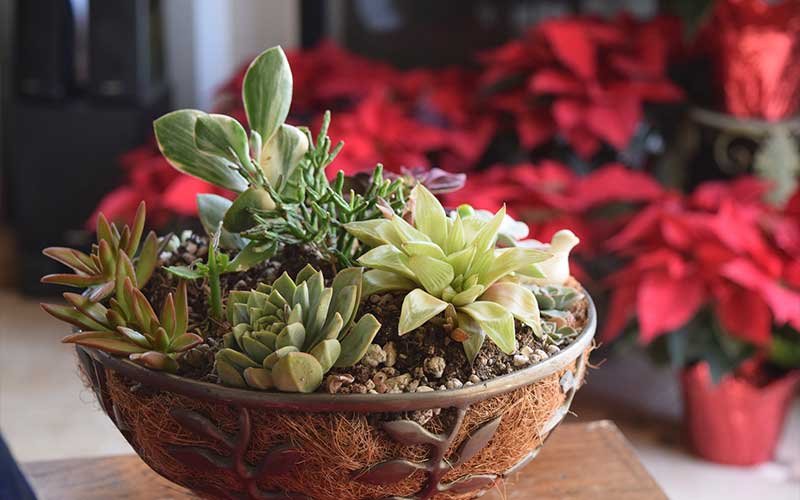
Succulents can be combined and arranged as an indoor garden. Succulents usually have shallow roots so they can be mixed in big containers like this and this.

A. Choose what succulents to combine and plant together – You can choose small succulent plants and combine them and plant them in a container so it will be easy for you to care for all of them at once. By creating a mini indoor succulent garden, there will be less watering and less maintenance This makes it a perfect idea for individuals who have busy schedules.

Make sure to choose the succulents that will complement each other. Succulents come in different sizes, shapes, and colors. You can visit your local garden center and ask them for help which ones will be great as a part of an indoor garden. You can also use succulent cuttings from your garden and use them for your indoor garden.

When combining succulents, be sure to choose colorful succulents, varicolored ones like the Zebra plant and plants that have different shapes and sizes. You can combine small succulents and make lovely arrangements that will add an aesthetic boost to your living room’s appearance.

Zebra plant

When you are choosing plants, make sure to choose the ones that you like as well as consider the size of the container that you will be using. You will base your mini garden on the succulent container that you will use.

To start your mini succulent garden, you can choose one tall succulent plant. This plant will be the focal piece of the arrangement. You can also add smaller succulents; these plants will be the filler plants for the collection. You can also add a flowing succulent plant.

The beauty of an indoor succulent garden is that you will be able to choose which plants you can use. An example is rat tail cactus, aeonium aloe, haworthia, zebra plant, and echeveria succulents. You have the freedom to mix and match whichever succulents you like to add to your indoor garden.

Here are some of the plants that you can use for your indoor succulent garden

1. Crown of Thorns – This succulent is an excellent choice if you want to add a splash of color to your indoor garden. This plant will need enough sunlight and can bloom red or yellow bracts with small flowers and can bloom all year round. This plant needs low to moderate watering and must be placed in direct sunlight so it will produce the best blooms.

Crown of Thorns

2. Zebra Plant – This succulent is named as such because it has horizontal stripes for its leaves. It is can grow 5 inches in length and 6 inches in width. The zebra plant is a perfect addition to an indoor succulent garden. It only requires a moderate amount of watering and sunlight exposure to grow healthy and well.

3. Aloe Vera – The Aloe Vera is a very popular succulent plant because of its medicinal properties for humans. Its sap can be used to heal wounds and also soothe burns. Aloe vera needs full sunlight and needs to be watered when the leaves are a bit dry or brittle.

4. Snake Plant – The snake plant (Sansevieria) is one of the most tolerant succulent plants. You can add this plant to your indoor succulent garden. It can survive with low light, a small amount of water, and has only a few insect problems. This plant is also known to remove toxins in the air, such as formaldehyde and benzene, which makes them the perfect houseplants.

5. Jade Plant – This succulent plant is a native plant commonly found in South Africa. This plant has thick stems and glossy green leaves. The jade plant can withstand bright light and will need watering when the soil feels dry. Just make sure to avoid overwatering, as this plant can be killed easily.

Jade Plant

6. Panda Plant – The panda plant is a succulent that has white hairs that gives it a fuzzy texture. This succulent is a native plant commonly found in Madagascar. This plant can survive dry climate indoors. Water your panda plant to prevent the leaves from withering.

7. Echeveria – This succulent plant comes in different colors and can thrive in dry climates. The plant will need watering when the soil is dry. Use a clay pot like this, clay pots allow water to evaporate. The echeveria can tolerate full sun exposure and you must use a well-draining soil like this.

If you are a beginner, use this book so you will know the important information that you will need on how to create an indoor succulent garden.

B. The Best Container to Use For an Indoor Succulent Garden

When planning for an indoor succulent garden, you must also consider the container that you will use. Succulents are prone to overwatering, so you must use a container that has drainage holes. This container can be used for your indoor garden. Terracotta containers can be used as well. Get one here. You can use this soil because succulents also need well-draining soil.

Terracotta pots are preferable for indoor succulent gardens because they are known for absorbing moisture and will help the soil to dry out faster. Succulent plants need the soil to dry out fast in between watering.

How to Make an Indoor Succulent Garden

Supplies needed for an indoor succulent garden

You can also purchase a succulent planter soil kit like this. You can also check out this Succulent Kit Organizer Bag Gardening Tool Set.

1. Get the succulent container and check the holes – If the container has large holes, you must use drainage netting. The drainage netting will prevent the soil from washing out of the drainage holes. At the same time, it will allow the water to drain out completely.

2. Add the succulent/cactus soil – This soil is preferred for succulents because it is well-draining. Succulents will not be able to survive in moist soil; their roots are prone to rotting. You must fill the container about half full with succulent soil.

Add the succulent/cactus soil

3. Add the focal succulent plant – The focal plant is the tallest plant of the indoor succulent garden. You can design it by placing your focal plant in the center of the pot; you can also place it in the back. Try experimenting. You will be able to find the best arrangement by trying out different arrangements of the plants.

4. Add the filler plants – The filler plants are the smaller succulents that can be added to the indoor succulent garden. These plants can be placed around the focal plant. The filler plants will take up the bulk of the pot, so they will take a lot of space. You can mix and match your favorite succulents, and check how the arrangement looks like once it is done.

5. Add the flowing succulent plant – This type of plant will enhance the beauty of your indoor succulent garden. The stems of the plant can overflow or spill out of the container which creates a new dimension to your indoor succulent garden. You can add one or more cascading plants, depending on your preference or how big the succulent container you will be using.

6. Fill the container with succulent soil – After adding all the succulents you have chosen for your indoor succulent garden, you can now fill the spaces between the plants with cactus/succulent soil. Place the soil gently as you work to fill the pot accordingly.

7. Water the succulents – After arranging everything, you must water the soil so all the succulents can settle and the succulents will be able to get established in the pot.

8. You can add the decorative rocks like this to add an aesthetic appeal to your indoor succulent garden – This step can be done after the soil has settled in the container. The decorative rocks will add a nice finishing touch to your indoor succulent garden and also it will keep the soil from washing out when you water it.

aesthetic appeal to your indoor succulent garden

Additional Tips for Your Indoor Succulent Garden

1. Place your indoor succulent garden in a sunny area. Just like any other plant, succulents need sunlight for them to live. Some succulents need at least 6 hours of sunlight exposure daily. You can place them in a south or west-facing window. Succulents that do not get enough sunlight are prone to become leggy or stretchy towards a light source. You can also use grow lights like this.

2. Allow the soil to dry out in between watering. One of the most common mistakes when growing succulents is overwatering them. Too much water can cause rotting of the succulent stems, leaves, and roots. Saturate the soil and allow it to dry out before watering again. If the potting soil stays wet, the plant can die. Use pumice stones to help drain water from the pot.

3. Fertilize the succulents at least once a year. The succulents need fertilizer during the growing season or springtime or late summer for winter-blooming plants. You can use a water-soluble fertilizer like 10-10-10 or 8-8-8, read the instructions in the product label and follow it accordingly. You can dilute the fertilizer and use half-strength only.

The plants do not need fertilizer during winter as some of them have winter dormancy. They will not need any nutrient boost when they are actively growing. You can also use manure tea, as it is safe and will not cause burns on the plants. Organic fertilizers are safe for the succulent plants and the environment as well. Get yours here.

Organic fertilizers are safe for the succulent

Frequently Asked Questions

Question 1: Can you use succulent seeds

Answer
: Yes, succulent seeds can be used. The seeds can grow indoors, just make sure to expose it with the right amount of sunlight and plant them in moist soil but they will grow slowly. The succulent seedlings need at least 6 months to a year before they can be repotted.

Question 2: Can you use succulent cuttings?

Answer: You can use succulent cuttings from your succulent collection. This way you can save money and use the available resources in your garden.

Question 3: Can you use sand as a soil for succulents?

Answer: Succulents are known to thrive in the sand in the wild, but they grow well in loose, well-draining, rocky soil. Sand is prone to compaction over time, causing the water to be retained in the container. The best soil for succulents is the cactus/succulent mix; you can buy one or create your very own mix.

Question 4: Why are the leaves falling off from my succulent plant? Is it normal ?

Answer: The leaves found in the lowest part of the plant (the ones near the soil) normally shrivel and wither. However, if all the leaves are withered, dried up, or shriveled, that means the plant is experiencing pests and diseases and it can also be caused by overwatering.

Why are the leaves falling off from my succulent plant
Are you searching for information on how to make an indoor succulent garden? You came to the right place. Eden Succulents is the best place where you can find all the things about succulents. If you want to know more information about succulents and how to take care of them, check out the rest of our website. If you have any inquiries or questions, we would like to hear from you! Please let us know how we can help you build a successful indoor succulent garden.
EMSCO Expandable Hose Hider

EMSCO Expandable Hose Hider

HIGHLY DURABLE POLY CONSTRUCTION – Made from premium polymerized resin, this expandable hose storage pot can withstand prolonged exposure to heat and moisture, guaranteeing a hose hider that is built to last. Its sturdy structure resists heat and chemical damage from environmental elements.
Creative Co-op Small Orange Terracotta Pots

Creative Co-op Small Orange Terracotta Pots

  • Perfect for a succulent or other small plant
  • Purchase multiples and place in a row on a windowsill
  • Can also be used to hold rings next to a sink or spare
Golden Crown of Thorns Plant - Euphorbia

Golden Crown of Thorns Plant - Euphorbia

  • Extremely easy house plant to grow
  • Prefets a sunny location
  • Water when dry
    Proper name: Euphorbia splendens
  • ‘Dinni’
    Immediate shipping
Haworthia Attenuata, Zebra Zebrina Exotic Rare

Haworthia Attenuata, Zebra Zebrina Exotic Rare

Cactus and succulents are pretty and very easy to grow, just sun and water ones a week, hard to kill plants, The plant for sale is similar to the one on picture and will be shipped BARE ROOTS, title say 2″ 4″ or 6″ pot for reference of the size of the plant, the pot or soil are not included, all our plants are FREE shipping and shipped bare roots (no pot or soil are included)
Invasive Succulent Species to Know About

Invasive Succulent Species to Know About

What first comes to mind when you hear the word “invasive” plant species? Do you know that some succulents are invasive species? Are you a plant lover like us? Maybe you are one of the many individuals who are enticed by succulents and are now planning to grow succulents indoors or in-ground as a lovely addition to your rock garden.

Before you proceed, make sure to read this article about invasive succulent species. Hopefully, we will be able to help you make an informed decision and you will be able to avoid these invasive succulent species in your garden. In case you still go for them, be careful as they spread and grow fast.

What are Invasive Plants?

Invasive plants are plants that are intentionally or accidentally introduced by humans in places and areas that are outside their natural habit. These invasive plants can spread easily because they do not have a natural predator, so when they start spreading rapidly, it can affect the native species and can also cause negative consequences to the environment.

Invasive plants can affect the diversity of the local or native species found in the environment. Some of the consequences found as a result of this include the fact that they can affect water availability and they can also damage the quality of soil nutrients. When an invasive plant species invade a habitat, they also affect the conditions of the environment. They change the light conditions, solar radiation, temperature levels, and this can also affect the local fauna and flora in that specific habitat.

An invasive plant species can cause changes that can damage the native vegetation in the area, as well as the nutrient cycling, increase the frequency of wildfires, and affect the water availability and cause erosion of the soil. Invasive plant species can have devastating effects on wildlife.

What Makes a Plant Invasive?

A plant can be invasive when they are not commonly found to that specific ecosystem and as a result, they can cause harm to the surroundings. They can harm the environment, human health, and the local ecosystem. If a succulent grows, reproduces, and spreads quickly with the potential to cause harm, they are called “invasive”.

Invasive plant species do not mean they have to come from a different country, but can also be a factor in its characteristics as an invasive specimen. For example, one plant is native to Mexico but is considered to be an invasive species in California because they affect and compete with the native plants found in that area.

What Makes a Plant Invasive?

How Do Invasive Plants Spread?

Invasive plant species are usually spread caused by human activities, although some are unintentionally done. For example, when people travel from different places they can carry uninvited species with them. Ornamental plants can accidentally spread into the wild and become invasive, such as invasive succulents that are unknowingly sold in garden centers and the buyers do not have any knowledge that these plants can destroy the native plants in the area as well as the environment.

When you are planning to grow succulents at home, make sure to consult garden centers on what plants are native to your area. Avoid buying succulents that can easily grow and rapidly spread in your home especially if you are a first-time grower and you do not have any experience in growing succulents. They can get out of hand and you will not be able to control their excessive growth.

Here are some of the invasive succulent plants

Kalanchoes – The queen of all succulent invasive species. They produce asexually by dropping little plantlets from their leaves. This plant is also commonly known as Mother of Thousands. When this plant accidentally makes its way into your succulent collection, it is often there to stay, unless you do something to control their spread and growth.

This succulent plant is also known for showing up unannounced along with another succulent purchase. While these are easy to pull up, they usually end up growing in cracks and crevices in the garden. Sometimes, they also sprout beside spiny and thorny plants, so it can be quite a chore to hunt and eliminate them all. You can place this plant indoors because it is a good-looking plant and will not be able to spread unlike when they are planted outdoors.

Mother of Thousands – This plant is also known as the Alligator plant and Devil’s backbone. Its scientific name is Kalanchoe daigremontiana. This native succulent of Madagascar is easy to grow and propagate. Its leaves have numerous plantlets that can spread quickly if left alone in the garden. They can fall and grow anywhere.

This plant has narrow and pointed blue-green leaves that are capable of growing up to 16 inches long and half as wide. It also produces bell-shaped flowers that grow circular within a single stem. If you decide to grow this succulent, just make sure to watch out for the tiny plantlets found growing along the leaves’ edges, when they fall off, they will root once in contact with the ground where they are dropped.

Make sure to separate it from other pots or other succulent collection as the plantlets can easily take over and grow over containers that are adjacent to it. This is a monocarpic plant, which means it is a plant that dies after blooming flowers. When this occurs, small plantlets will replace it when it dies.

Mother of Millions – This plant is also known as Chandelier Plant. Its scientific name is Kalanchoe delagoensis. The Mother of Millions is a native succulent commonly found in Madagascar. This plant is a perennial succulent.

It can grow up to 3.3 feet tall and its leaves are thin and narrow and it is known to reproduce asexually. Small plantlets are found in the edges of their leaves. The plantlets can grow anywhere they land and its seeds are capable of surviving for years even when the plants are pulled out.

The Mother of Millions can thrive in harsh conditions and can live in different environments, so they are considered as weeds and invasive species in some parts of the world. This succulent is easy to care for and can multiply effortlessly if you choose to grow this plant. It can grow and spread quickly, so watch out for that!

The Mother of Millions

Agave – This variety of succulent has different types of species that are potentially invasive because they produce offsets quickly. Most suckering species produce offsets at the base of the mother plant. Since a lot of agave species are large and spinier, they can be quite annoying if they spread in your garden and can also affect the other plants.

Agave is commonly found in hot and arid climates in the Americas. This succulent is xerophytic, which means it only needs a small amount of water to survive. Agave forms large rosettes of strong and fleshy leaves, they usually have spines that can be quite painful if bumped into accidentally.

1. Agave americana – This is known as the most aggressive species of Agave. They grow fast and can spread all over the garden; some can spread over a dozen feet from the mother plant, and quite difficult to deal with.

2. Agave angustifolia – This species can spread and travel quite a bit of distance. This plant has a lot of spines and can be difficult to handle and eradicate. You need to remove all its roots from the soil for you to effectively remove it from the area.

3. Agave sisalana – This species is difficult to contain, and can produce remote offsets. It is easier to handle than the other agave species, but you must watch out for its viscous terminal spine!

Carrion Flower – This plant is also known as the Zulu giant. Its scientific name is Stapelia gigantea. The Carrion Flower is a flowering succulent plant native to South Africa and Tanzania. It resembles a cactus but it is a member of the milkweed family.

Unlike other plants that butterflies and bees pollinate, flies pollinate this plant, so its flowers are foul scented and usually resemble the scent of rotting meat! The Carrion Flower easily grows and they can produce remarkable growth especially if grown in the garden. It can easily double or triple its size in a single year. It will need sun exposure and a well-draining soil like this. It thrives best in areas that have warm temperatures to grow fully and healthier.

Aloes – Aloes are quite popular with succulent growers because of their medicinal and beneficial properties for humans. If you choose to grow this plant, you have to be prepared because they can be invasive locally. They are capable of popping up in different areas, sometimes several feet from its mother plant. Aloes grow fast and spread quickly. You can use this container when growing Aloes.

Aloes are quite popular with succulent growers

1. Aloe greatheadii – Spotted aloes that can grow fast and spread in the yard.

2. Aloe greenii – This species can spread quite quickly. It is easy to care for, just give it a decent watering and it will take off. The Aloe greenii has razor-sharp teeth so it can be difficult to deal with. When you try to pull it out, it can also yank out other plants in the garden as its roots are quite huge which means it can get caught in the other plants within the area.

3. Aloe maculata – One of the three spotted aloes that can grow and spread fast and it can also affect other succulents near it.

Ice Plants – This type of succulent specimen is a member of the Aizoacea family. They are collectively called Ice Plants. When they are grown in the ground, they can grow quite fast and even spread quick. They are popular choices for using as a ground cover.

If you find this invasive species in your garden you can pull them out because they have weak roots and do not have any spines. This succulent is commonly chosen for ground covers because they have amazing colors. Get Ice Plant seeds here.

Euphorbia – Some species of Euphorbia can be invasive, like the Spurges. They can be quite invasive, especially if left alone in the garden. The Euphorbia xantii has thin stems and can produce blooms of a hundred white and pink flowers during winter which can easily spread and grow in the garden everywhere.

If there are new seedlings, you can easily pull them out. You have to watch out when handling this plant because the sap from Euphorbia is highly toxic and can cause skin irritation. Euphorbia lambii is a succulent that can multiply and grow in areas meters away from the mother plant.

Sedums and Senecios – Both of these species are commonly used as ground cover, and they can be invasive in your garden. The sedum produces offsets that can spread and end up everywhere. The good news is these are fairly easy to remove. The senecios resemble the appearance of Ice Plants. They are bluish and can be used as ornaments but you must be careful because they can grow all over the place quickly.

Pregnant Onion – Its scientific name is Ornithogalum longibracteatum. This plant looks like a giant green onion and produces flower stalks that can produce plenty of seeds. This plant produces plantlets along the surface of the plant’s body and can spread and grow everywhere.

They are easy to remove as they can be pulled out of the ground. However, you must watch out because they can affect other plants surrounding it. You may need to replant them once they’ve been pulled out from the ground. Although there are succulent species that have benefits to humans, they have an undesirable impact that can cause an increase in financial costs and alter entire ecosystems.

Humans unknowingly spread invasive succulents because they use these in a variety of ways, such as: ornamental or as decoration, as well as food for humans or fodder for livestock. Some succulents are used as hedging as protection for properties and also for its medicinal purposes, such as aloe vera. The aloe vera plant is a well-known succulent that is grown for its medicinal and beneficial properties to humans. It has been used for more than thousands of years because of this characteristic.

Humans unknowingly spread invasive succulents

How to Stop Succulents From Spreading

1. Plant native succulents only. Make sure to remove any invasive plants in your garden. There are a lot of good native plant alternatives that you can plant in your garden and even as indoor ornaments. You must verify any succulents that you are buying and you can ask a local nursery staff to help you identify invasive succulent species.

2. Learn to identify invasive succulent species in your area. If you see any invasive species, make sure to report them to your local land manager or county extension agent. They can arrange a clean-up to remove any invasive succulent species in the area.

3. When you are visiting other places, make sure to check all your equipment that can cause the spread of invasive species in your area.

4. Avoid buying invasive succulent species from garden centers. You can also inform the person in charge that they are selling invasive species so they can do something about it.

5. Apply as a volunteer at your local wildlife area, local parks to help remove invasive plants. As a volunteer, you can help educate others about invasive species.

How to Stop Succulents From Spreading

Best Removal Method for Invasive Species

1. Natural way – Organic way to get rid of the invasive plants, this is safe for your other plants in the garden. You can pull out the plants; make sure to remove the roots as well.

Organic method – You can use vinegar as a natural herbicide. Some gardeners use boiling water to kill invasive plant species. Sometimes the organic method doesn’t work, so do not get your hopes up. You can also get rid of invasive plants by naturally choking them; you can kill these plants by using tarps.

2. Chemical herbicides – Read the instructions on the product’s label before buying it. Some herbicides are created specifically for “woody” plants.

Glyphosate – A populate chemical herbicide, it is a non-selective type of herbicide. If you use it in your garden to get rid of invasive succulents, and it can also kill other plants in the area. Be very careful when using it. You can use the herbicide injection method rather than spraying it. You can control which plant will be affected by the herbicide and you will not be killing the other plants in the garden.

We can prevent invasive succulent species from spreading. If we allow these species to live in our ecosystem, they will outcompete and affect the native species in the area. Invasive succulents can affect the soil quality which can result in erosion and can also affect the quality of the water.

When the succulents become crowded, they can also affect other native species and also decrease carbon that plants need and also affect the habitat for native wildlife. The best way to stop invasive succulent species is to prevent them from occurring.

Do you know any other way to remove invasive succulent plants? Please let us know, we would like to hear your thoughts!

When the succulents become crowded
Are you a plant lover? Are you planning to start growing or caring for succulents? Do you know that some succulents are invasive? If you want to know more about succulents please make sure to check out the rest of our website.

If you have any comments, suggestions, inquiries, or questions please do not hesitate to contact us. If you are just starting to grow succulents at home whether indoors or outdoors, please let us know how we can help you. We are looking forward to hearing from you!

Mother of Millions Kalanchoe

Mother of Millions Kalanchoe

We guarantee plant’s safe arrival otherwise we will refund or send you a replacement plant
LOJI Stapelia gigantea 'Zulu Giant'

LOJI Stapelia gigantea 'Zulu Giant'

Name: LOJI Stapelia gigantea ‘Zulu giant’, rare asclepiadaceae, Orbea, Huernia, caralluma – RK145
Everything You Need To Know About Succulents and Pets

Everything You Need To Know About Succulents and Pets

Succulents have been popular lately because they are an excellent addition to any room’s appearance; it boosts the room’s aesthetic effect. If you have pet cats and dogs and you want to grow succulents at home, you need to be aware of how succulents can affect your pets. Do you know that some succulents are toxic to pets?

Although some varieties are safe around pets, as a responsible pet owner you have to know which variety of succulents are toxic and can pose a threat to your beloved pets. In this article, we will be discussing both safe and toxic succulents to pets.

Hopefully, we will be able to share with you everything you need to know about succulents and pets. Pets and plants can cohabit in the same living space, but you need to make sure that you are well-informed to help make this happen. Here is some information you need to know so you can have a harmonious and safe home for both of your pets and succulents.

Cats and dogs love to chew on plants, so you must make sure to keep your pets and plants away from each other. Sometimes pets cannot control themselves and will try to investigate and munch on plants even though some of these plants can cause gastrointestinal problems when ingested.

Cats

Why are Some Succulents Toxic and Dangerous?

Succulents are an amazing addition to any room as a decoration or a part of rock gardens outdoors. Succulents have evolved and devised strategies to protect themselves from any predators or herbivores that can eat or damage them by biting off their leaves or stems.

Plants cannot defend themselves and they cannot run away from animals so they have developed thorns, spines. Some types give off an awful smell and taste. In fact, some varieties can be quite toxic and dangerous when ingested. Most domesticated pets do not pay attention to the smell of the plants and sometimes they cannot control themselves, so they nibble on the plants without even knowing that these plants can be harmful to them.

What Succulents are Safe to be Around Your Pets?

1. Blue Echeveria – Blue Echeveria is the common name for several succulent species such as E. elegans and E. imbricate. This succulent is safe for people and pets. This plant can be propagated easily as they can multiply quickly. Simple and elegant this lovely succulent is a great plant as a solo piece. You can use this planter container if you want to grow this plant at home.

2. Firecracker Plant (Echeveria Sentosa var. Deminuta) – A native plant found in Mexico, this succulent has a unique look because it is covered with soft and hairy fuzz. The Firecracker plant blooms bright red and yellow flowers.
3. Mexican Snowballs (Echeveria Elegans) – A native succulent plant of Mexico. This plant has bluish-green leaves and becomes pinkish on its tips when it matures. The Mexican snowballs plant blooms with lovely pink flowers. When growing this succulent you must be aware that it can become crowded quickly as it produces offsets easily.
Mexican Snowballs
4. Plush Plant or Ruby Blush (Echeveria Pulvinata) – A native plant commonly found in Mexico, this succulent grows in small shrubs and has hairy green leaves with silvery-white fuzz and reddish tips. This plant blooms beautiful red, yellow, and orange bell-shaped blooms. Echeveria species are not frost hardy and will need to be placed indoors and be protected from freezing temperatures during wintertime.

5. Burro’s Tail (Sedum Morganianum) – A native plant to Southern Mexico, this succulent is one of the most popular houseplants because it can be placed in hanging baskets. This plant is a perennial evergreen and has long hanging stems and can grow up to 3 feet long. The leaves of the Burro’s Tail are plump and spherical and they are bluish-green.

The Burro’s Tail is a trailing plant and looks amazing as a decoration. You can use a hanging basket like this. This plant prefers areas that have partial shade and it looks great when added to any succulent collection.

6. Ponytail Palm (Beaucarnea Recurvata) – This plant has a confusing name because it is not a palm tree; the Ponytail Palm is a succulent from the Agave family. It has a bulbous trunk, mainly because its trunk is where it stores water and it also has long and thin hair-like leaves that grow from the top part of the trunk that resembles a ponytail.

The ponytail palm is low-maintenance and only needs little watering. This plant is perfect for individuals who prefer succulents that are easy to care for. This succulent can tolerate low light conditions, so you can place them in shaded areas or indoors. This plant is safe to have around your pets.

7. Black Rose (Aenium Arboreum Zwartkop) – This succulent has a unique feature: beautiful dark purple foliage. This plant has striking rosettes that resemble a cluster of flowers and it also has waxy leaves. This succulent can grow over 3 feet long. This plant is monocarpic, which means they die after flowering only once, they produce offsets before they bloom flowers.

Aenium Arboreum Zwartkop

8. Zebra plant (Haworthia attenuata) – This plant is extremely versatile, as one of the most photogenic succulents, the zebra plant is also very low-maintenance. It can thrive in areas that have low-light. When you are planning to grow this succulent, do not place it in a terrarium. Terrariums do not have drainage holes and have increased humidity; some succulents do not prefer this type of living condition.

The zebra plant looks like an aloe plant; they belong in the same subfamily. This plant has pointed green leaves and white spots that resemble the zebra’s stripes. This succulent produces offshoots easily especially when they are mature so you can propagate them easily.

9. Hens and Chicks (Sempervivums) – This plant belongs to a large genus of succulent plants. This succulent is cold hardy and can stand harsh climates making them perfect outdoor plants. This plant is called hens and chicks because they are easily propagated. The hen or the mother plant multiplies easily and forms small baby chicks, which then you can repot in pots like this. The clusters of rosettes can grow up to 8 inches wide. This plant comes in many varieties of color, size, and texture that you can choose from accordingly.

10. Ghost Plant (Graptopetalum Paraguayense) – This succulent is a perennial plant native to Mexico. The Ghost plant has thick, fleshy, triangular leaves that form into clusters that resemble beautiful rosettes. The stems of the ghost plant trail or hang while they grow and mature. You can use a hanging planter like this.

Ranging from pale blue to light purple, the ghost plant turns slightly translucent and pinkish. If exposed in full sunlight and little watering, this plant turns gray with pink overtones.

What Succulents are Toxic to Pets?

1. Panda plant (Kalanchoe Tomentosa) – Toxic to Cats and Dogs

Panda plants belong to the Kalanchoe genus, which includes tropical flowering plants that bloom even during the coldest months in winter. This succulent is low-maintenance and can tolerate dry climates which makes them a popular succulent houseplant. Panda plants are perennial shrubs that have furry leaves that are greenish-gray in color and have white fuzzy hair and brown spots on its margins and tips. Kalanchoe plants contain cardiac glycosides that can be lethal if ingested in large amounts.

Symptoms – increased salivation, vomiting, abdominal pain, diarrhea, lethargy

When ingested in large amounts, it can also cause irregular heart rate, increased heart rate, difficulty in breathing, severe weakness, fainting, and can sometimes it can be lethal.

Kalanchoe Tomentosa

2. Aloe Vera – Toxic to Dogs, Cats, and Horses

Aloe is a popular genus of small dwarf species and large tree-like species that is capable of growing up to 30 feet. This succulent has thick, fleshy, green to bluish grey-green leaves. Some varieties have white flecks on its stem. Aloe Vera is widely popular due to its medicinal and beneficial properties to humans.

When pets ingest aloe vera, it is toxic. It has saponin, which is a main toxin that can cause serious, lethal problems when ingested by your pet cat or dog. You can use this pot if you decide to grow this succulent.

Symptoms – Abdominal pain, diarrhea, nausea, vomiting, skin irritation, lethargy, and tremors.

3. Crown of Thorns (Euphorbia Milii) – Toxic to Dogs and Humans

A native succulent plant found in Madagascar, the crown of thorns is capable of growing indoors. However, since it is toxic to dogs and humans, you have to place it in an area where no one can reach it. It has sharp thorns and can be quite painful if accidentally bumped into.
The plant has a white sap that contains the strongest amount of toxicity which is poisonous and can also cause skin irritation. This succulent is very prickly because of its 1/2 inch thorns and it also tastes bitter. Take extreme precautions when handling this plant. The sap oozes from broken leaves or stem and it can cause skin irritation. Make sure to wash your hands after handling this plant.

Symptoms – Nausea, vomiting, diarrhea (when ingested)

Skin irritation, dermatitis, and can also cause blisters and swelling of the mouth and eyes. (contact symptoms)

4. Pencil Cactus (Euphorbia Tiruacalli) – Toxic to Dogs, Cats, and Horses

A native succulent plant to Africa and Madagascar, this succulent belongs to a large genus of plants. The pencil cactus has small and slender leaves and has cylindrical branches. This plant comes in different colors, from green to red-orange, and may intensify as the colder months come. The sap from this plant is the main irritant, so be careful when handling it.

Symptoms – Mild irritation to the mouth and stomach when ingested, can also cause vomiting (usually mild symptoms only occur)

5. Snake Plant (Sansevieria Trifasciata) – Toxic to Cats and Dogs

Snake Plant or Mother in Law’s tongue is a native succulent plant commonly found in West Africa. Its leaves are long and pointed upwards and have yellow edges that may resemble a snake. This succulent is easy to care for because it can thrive in harsh conditions.

This plant contains saponin, a chemical that causes mild toxicity. A lot of succulent growers prefer this plant because it can help purify the air by removing formaldehyde and benzene toxins found in the air.

Symptoms – Nausea, vomiting, diarrhea

6. String of Pearls (Senecio Rowleyanus) – Toxic to dogs, cats, and other animals

This succulent is a native plant found in South Africa. This plant has become popular with succulent growers because it trails as it grows and it is extremely versatile. Its stems can grow up to 3 feet in length and can be left trailing or hanging, you can use a hanging planter like this when you plan to grow it at home.

The stems of this plant are lined with pea-like leaves that can be quite tempting for your pets. This plant blooms white flowers that have sweet cinnamon-vanilla scent that can be quite tempting to some animals. The String of pearls is not frost-tolerant and will need protection from direct sunlight.

The sap of this plant can cause skin irritation and dermatitis to humans and pets. Be careful when handling this plant!

Symptoms – Vomiting, diarrhea, drooling, lethargy.

Senecio Rowleyanus

7. Jade plant (Crassula ovata) – Toxic to Cats and Dogs

This variety of succulent is one of the most popular varieties of houseplant. The jade plant is native to South Africa and Mozambique. This plant is also known as a money tree, friendship tree, or lucky plant. This succulent looks like a mini-tree and has thick, fleshy, smooth oval-shaped leaves that grow in opposite pairs.

Symptoms – Vomiting, depression, lethargy, in-coordination, decreased heart rate

8. Mother of Thousands (Kalanchoe Daigremontiana) – Toxic to Cats, Dogs, Birds, and Cows

This succulent plant is native to Madagascar. This plant is considered a nuisance because it can multiply and grow very quickly. It has large green leaves that form small plantlets along its edges. The plantlets are capable of growing anywhere they land, which can get out of hand because they are rapid growers. The Mother of Thousands is hardy and can tolerate extreme heat once it is established. It contains a toxic steroid, daigremontianin.

Symptoms – Vomiting, diarrhea, weakness, and sometimes can cause irregular heart rate, seizures, tremors and collapse

9. Mother of Millions (Kalanchoe Delagoensis) – Toxic to Cats, Dogs, and Other Animals

This succulent is also referred to as Bryophyllum Delagoensis. This plant rapidly grows as it multiplies easily; the small plantlets it produces can grow anywhere it lands, hence the name Mother of Millions. The seeds of the plants can survive for a year even when the plants are pulled out.

It can survive in dry climates and can adapt to different environments. This plant is considered as weeds in some areas and they contain bufadienolide cardiac glycosides, which is fatal when ingested in large amounts.

Synonyms – abdominal irritation, vomiting, diarrhea, irregular heart rhythm, and the risk is high if large amounts are ingested.

10. Silver Jade Plant (Crassula Arborescens) – Toxic to Cats and Dogs

This succulent is a native plant commonly found in South Africa. This plant has a distinguishing feature: “silver dollar” leaves which are silvery-green in color and has a round shape with reddish edges.

Symptoms – Nausea and vomiting

How to Keep Your Pets Away From Your Succulents

How to Keep Your Pets Away From Your Succulents

When you have a succulent collection at home or in your garden, make sure they are out of reach to your pets. Avoid raising varieties that are toxic to them. If you decide to purchase toxic varieties of plants, make sure to keep them in an area that your pets will not be able to access.

If you find out that your pet has accidentally ingested any of the toxic plants, make sure to call your vet or go to an animal hospital. You can also call the animal poison control center, just in case a specific treatment needs to be done for your pet.

Here are some of the ways you can do to keep your pets away from your succulents:

1. Aluminum foil – You can use it to wrap a layer on the top part of the succulent container. You can use it on the soil so your pets, especially cats, will avoid it.

2. Pine cones – You can use pine cones by surrounding the succulents with them so your pets will not be able to get to them.

3. Cages – You can use cages and place the toxic succulents inside so your pets will not be able to get to them. You can place your plants on shelves or windowsills or place them in a hanging basket. Keep them low enough so you can reach it for watering.

4. Coffee grounds, orange peels, or lemon peels – These items are commonly found inside homes, just sprinkle them on the soil and spread the orange or lemon peels on the soil so the pets will stay away from your succulents. This will also help replenish the soil.

5. Terrariums – You can use open or closed terrariums to keep your succulents safe from your pets. The terrarium will provide shelter for your plants and prevent your pets from getting to them. A terrarium needs less watering, so if you have a hectic schedule, this is a perfect solution for you! Check this out if you want one!

What To Do if Your Pet Accidentally Ingested a Toxic Succulent

If your pet has accidentally eaten a succulent, you must immediately check and identify the plant. Call your veterinarian, especially if you know that the variety is poisonous. If your vet is not familiar with succulents, you must immediately call a poison control center nearest you!
  • ASPCA Animal Poison Control Center – (888)-426-4435
  • Pet Poison Helpline – (855)-764-7661
What To Do if Your Pet Accidentally Ingested a Toxic Succulent

If you know any other ways to deal with having both pets and succulents at home, please do not hesitate to let us know. We are looking forward to hearing from you!

Do you have a succulent collection? Do you have pets at home? We all know pets can be sometimes a bit curious and try to eat plants out of curiosity. Learning about safe and toxic succulents while having pets will equip you with the knowledge on how to manage everything at home.

If you want to know more information about toxic and non-toxic succulents, you have to check out the rest of our website. We offer plenty of information on everything you need to know about raising succulents. If you have any questions or inquiries about succulents, please let us know. We’d love to hear from you!

Blue Echeveria Peacockii Succulents

Blue Echeveria Peacockii Succulents

  • Blue Echeveria Peacockii Succulents in 4″ pot. Great for gifting!
  • Blue Echeveria Peacockii Succulents do well in your garden, on a patio, or in a sunny window. Comes in a 4″ green pot with our own premium succulent soil blend.
Donkey Tail Succulents 12 Pieces Large Cuttings Rare

Donkey Tail Succulents 12 Pieces Large Cuttings Rare

  • Donkey Tail Succulents 12 Pieces Large Cuttings Rare MHWK43
  • Easy to grow, just place it above ground due to it will hanging down like a hair. It is so gorgeous when it hanging down. Very fast growing and multiply very quickly.
Keter 221486 Hanging Planter Set, Espresso Brown

Keter 221486 Hanging Planter Set, Espresso Brown

  • 2 attractive hanging spheres make a great addition to any part of your home – indoors or outdoors
  • Measures 13.9″ wide by 13.9″ deep by 15″ high
United Nursery Ponytail Palm Tree

United Nursery Ponytail Palm Tree

GREAT LIVE PLANT FOR BEGINNERS – It adapts to any room in the house, but indirect bright to medium light conditions is the best. This plant can acclimate in direct sunlight. You don’t have to worry about watering too much as the Ponytail Palm requires little watering. Always let the top 50% of the soil dry out between waterings.